Villa College has institutionalized its commitment to sustainability education through the Connected Curriculum Framework (CCF), directly aligning academic practice with Strategic Plan 2023–2027 and United Nations SDG Target 4.7. Built upon nine core dimensions of good practice in programme design, the CCF positions Sustainability as its first and foundational dimension, mandating that all academic offerings incorporate Sustainable Development Goals (SDGs) and action-oriented, problem-based learning tailored to Small Island Developing States (SIDS).
An audit of all active, MQA-approved academic offerings confirms that 100% of Villa College’s 218 academic programmes are explicitly mapped to the SDGs, fulfilling the criteria for education integrated across the full curriculum:
All 218 programmes across 7 faculties and academic centres incorporate SDG 4: Quality Education as a core standard.
Full integration spans the Faculty of Educational Studies (56 programmes), Qasim Ibrahim School of Business (56 programmes), Faculty of Engineering and Technology (39 programmes), Centre for Foundation Studies (36 programmes), Faculty of Health Sciences (17 programmes), Faculty of Shariah and Law (10 programmes), and Centre for Postgraduate Studies (4 programmes).
Beyond SDG 4, curriculum mapping shows primary concentration in SDG 12: Responsible Consumption & Production (76 programmes), SDG 9: Industry, Innovation & Infrastructure (49 programmes), SDG 17: Partnerships for the Goals (32 programmes), SDG 11: Sustainable Cities & Communities (31 programmes), SDG 3: Good Health & Well-being (27 programmes), SDG 7: Affordable & Clean Energy (23 programmes), SDG 6: Clean Water & Sanitation (22 programmes), and SDG 13: Climate Action (22 programmes).
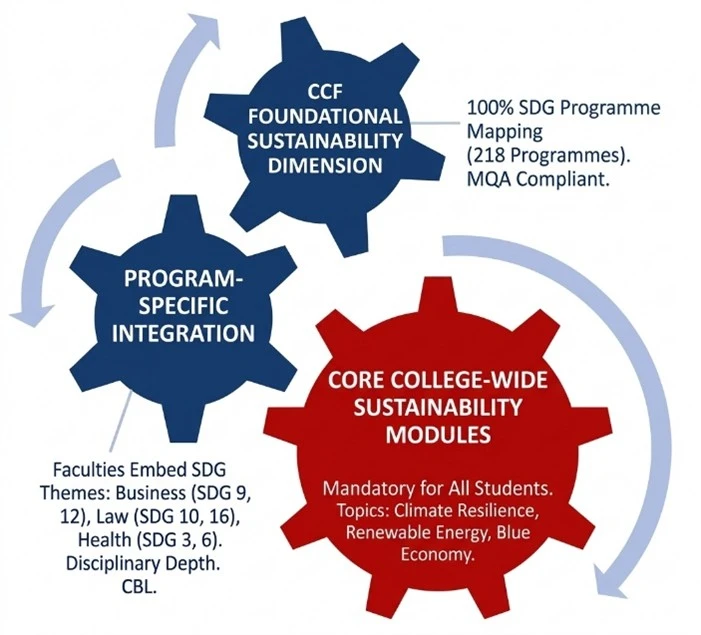
To ensure both universal baseline competency and practical disciplinary specialization, Villa College executes sustainability teaching through a structured two-phased delivery model:
Phase 1: Dedicated Courses on Sustainability (College-wide Integration)
Since 2023, 100% of undergraduate students across all disciplines must complete a compulsory, college-wide sustainability course. Undergraduate students complete a compulsory, full-credit course, Sustainability: Theory, Practice and Impact. Designed specifically around SIDS vulnerabilities in the Maldives, the module embeds foundational knowledge in:
Climate change mitigation, adaptation, and SIDS resilience
Renewable energy technologies and transition strategies
Sustainable economic development, resource efficiency, and the Blue Economy
Phase 2: Disciplinary Depth & Faculty-Specific Embedding
Faculties integrate domain-specific SDG applications directly into degree modules:
Qasim Ibrahim School of Business (QISB) & School of Computing (SCS): Embed SDG 9 and SDG 12 into corporate governance, digital entrepreneurship, ethical tech systems, and sustainable business models.
Faculty of Health Sciences (FHS): Connects SDG 3 and SDG 6 through clinical placements, preventive care, first aid training, and island-based public health campaigns.
Faculty of Shariah & Law (FSL): Aligns with SDG 10 and SDG 16 via legal aid clinics, human rights modules, judicial reform studies, and Islamic equity responses to poverty.
Faculty of Educational Studies (FES): Focuses on SDG 4 and SDG 5 through inclusive pedagogy, Universal Design for Learning (UDL), and gender-responsive lesson development.
Faculty of Engineering & Technology (FET): Advances SDG 7 and SDG 9 via hands-on solar power installations, smart building designs, and engineering ethics coursework.
School of Psychology and Counselling (SPC): Drives SDG 3 by embedding mental health awareness, neurodiversity, and emotional intelligence into community interventions.
Centre for Foundation Studies (CFS) & School of Hospitality, Tourism and Experiential Industries (SHTEI): Integrates SDG 8 and SDG 11 through sustainable resort management audits, eco-tourism models, and local island economic development.
Villa College operationalizes theoretical learning through mandatory Problem-Based Learning (PBL) and Community-Based Learning (CBL):
Nursing and Health Sciences (SDG 3): Community health nursing visits, CSR outreach in GA. Villingili, the “Healing Together” programme at Vilunu Detox Centre and the Migrant Workers Wellbeing Camp.
Law (SDG 10, 16): Legal aid training with Transparency Maldives, the Rasfannu legal aid camp, Street Law sessions and the Judges Residency Programme.
Engineering (SDG 7, 9, 13, 14): Wave energy, water quality monitoring, beach-cleaning and solar fish-drying projects at World Ozone Day and the Maldives Expo 2025.
Business (SDG 8, 12): EY guest lecture on ESG and sustainability reporting, Global Entrepreneurship Week and the Naiboli Business Expo.
Interior Architecture (SDG 11, 13): An expert session on sustainable architecture and design projects on inclusive urban living.
Psychology (SDG 3): The 4th Psychology Exhibition, the first International Psychology Conference and a mobility internship in Malaysia.
Separately from the compulsory module taken by all students, the College offers specific degrees whose curricula are mapped to the environmental and social SDGs. According to the College’s SDG mapping, they include:
Engineering (17 programmes, SDG 7, 9, 11, 12, 13): Bachelor of Civil Engineering (Hons); Bachelors of Mechanical, Mechatronics and Electrical & Electronics Engineering (Hons); Masters of Engineering (Electrical, Electronics, Mechanical, Mechatronics, Computing); Postgraduate Diploma in Engineering; Advanced Diplomas and Diplomas in Civil, Mechanical, Mechatronics and Electrical Engineering; and Bachelor and Advanced Diploma of Quantity Surveying (SDG 9, 11, 12, 13).
Public Health (7 programmes, SDG 3, 6, 10, 17): MSc Public Health, Master of Public Health, Master of Research in Public Health, and Postgraduate Diplomas and Certificates in Public Health, mapped to health, clean water and sanitation, and reduced inequalities. In 2025, Master of Public Health students carried out 3SWater research on safe water in small islands.
Interior Architecture (SDG 7, 11, 12, 13): Bachelor of Arts in Interior Architecture and Design, mapped to clean energy, sustainable cities, responsible consumption and climate action. In 2025, students attended an expert session on sustainable architecture.
Hospitality (SDG 6, 8, 12, 13): Bachelor and Master of International Hospitality Management, mapped to responsible consumption and climate action (the Master’s also to clean water and decent work).
Political Science (SDG 13, 16): Bachelor and Diploma of Political Science and International Relations, mapped to climate action and peace, justice and strong institutions.
Culinary Arts and Aquatic Recreation (SDG 2, 6, 7, 12, 14, 15): Certificates 3 and 4 in Culinary Arts (mapped to food security, water, energy and responsible consumption) and Certificate 3 in Aquatic Recreation (SDG 14).
Diploma in Teaching Primary and Special Educational Needs: Launched with the Ministry of Education, this fully funded programme prepares teachers for inclusive classrooms (SDG 4.5 and 4.7).
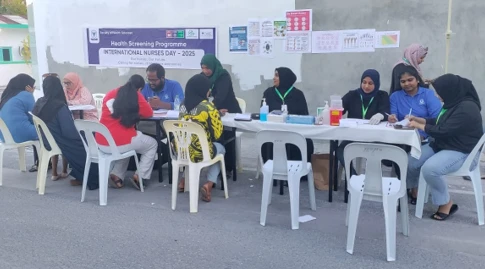
Villa College is dedicated to extending its sustainability and educational expertise beyond campus boundaries to foster inclusive, resilient, and informed communities. In 2025, the College conducted 54 health outreach activities involving students, faculty, and alumni targeting local communities, displaced populations, and immigrant workers alongside over 85 educational outreach initiatives. These programmes democratize access to essential knowledge, advance public health literacy, and address socio-economic inequalities across diverse societal groups.
Local Community:
In 2025, the College ran free educational outreach for the wider community, including:
Financial literacy workshop for women aged 25–45 and Women’s Development Committee members in Kulhudhuffushi (SDG 1, 5).
Basic Tourism Chinese Course in Maafushi for council, company, hospital and school participants (SDG 4, 8).
Free legal consultations on family matters and domestic violence for International Women’s Day (SDG 5, 16).
Women’s Health & Wellness Screening and “Eventful Evening – Ehaaraai Mihaaru” for community members aged 50 and over (SDG 3, 10).
Free public sessions on Waqf for sustainable development, teaching learners with autism, The Power of Reading and Islamic Finance 101.
A nationwide tree-planting competition for the International Day of Forests (SDG 13, 15).
IMERC community health sessions in Maafushi and the Ministry of Health Health Expo 2025 (SDG 3).
Fully funded NC3 Guesthouse Operations training for unemployed people under the SAILS project (SDG 8).
A Preceptorship Training Programme for 20 nurses from IGMH, HMH, ADK Hospital and Vilimale’ Hospital (SDG 3, 4).
Alumni:
Villa College engages its alumni network as active ambassadors of the SDGs, driving professional development and community-based solutions:
Alumni-Led Clinical & Educational Workshops: Alumni collaborate with current students as co-facilitators and mentors in specialized training, including point-of-care emergency care, CPR workshops, and special educational needs (SEN) inclusive teaching simulations.
Professional Continuous Development: Alumni benefit from free capacity-building webinars co-hosted with international partner universities, focusing on research-informed teaching practices, literacy enhancement, and corporate sustainability management.
Pro-Bono Community Advocacy: Alumni from the Faculty of Shariah & Law participate alongside current students in legal aid clinics and human rights workshops organized with local NGOs, expanding legal access and advocacy for underserved populations.
Displaced People and Refugees:
The Maldives has no significant refugee population. The College’s outreach to vulnerable populations focused on migrant workers, through multilingual legal aid, health and rights education at the Migrant Workers Wellbeing Camp and the Rasfannu Legal Aid Camp.
Villa College has made significant efforts to democratize SDG-related knowledge, leveraging technology and open-access formats to expand meaningful learning opportunities beyond the formal student body. These outreach initiatives directly support lifelong learning and the dissemination goals of SDG 4.7.
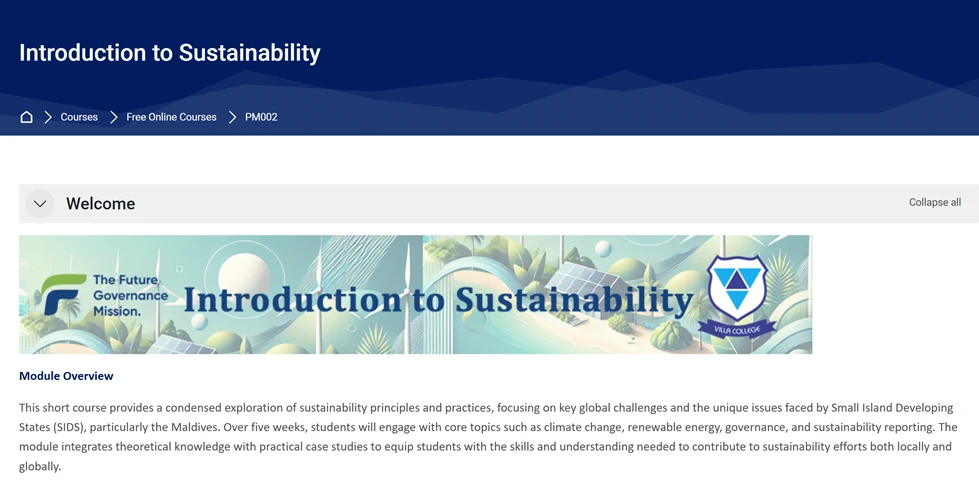
MOOC on Introduction to Sustainability:
Launched in 2024, a publicly available, MOOC-style course on "Introduction to Sustainability" provides free access to foundational concepts in sustainable development, climate literacy, and ethical citizenship. This resource ensures essential sustainability knowledge is available to the wider Maldivian community.
Digital Literacy MOOCs:
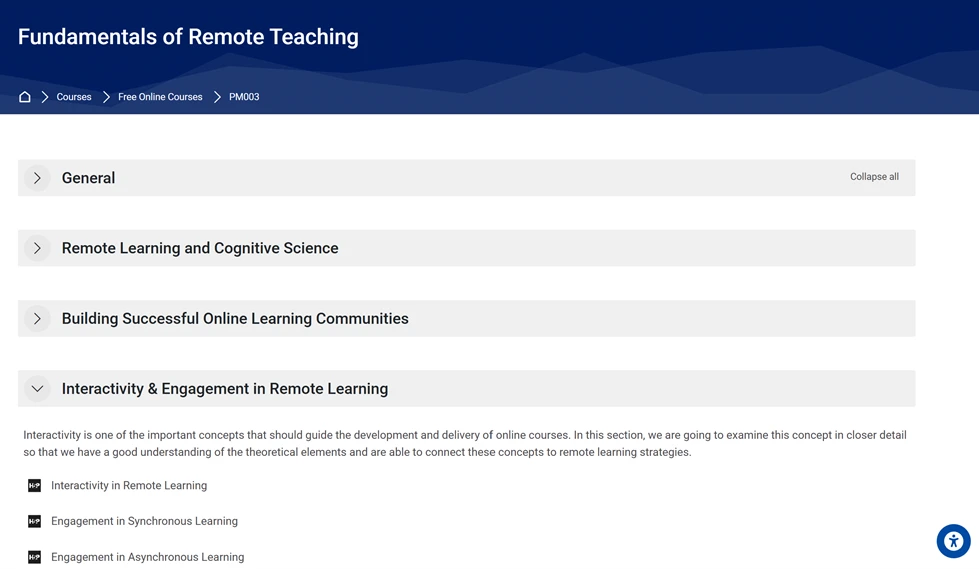
To support widespread digital competency, the College offers free, MOOC-style courses on "Fundamentals of Online Learning and Teaching" and "Basics of LMS (Moodle)" to the public.
Public Health and Well-being Education:
Health and Psychology faculties actively reinforce the College’s public education mission by conducting open webinars and awareness campaigns during national events. This includes specialized public health webinars and exhibitions aimed at improving community well-being and mental health literacy.
Open Access Research:
The College maintains open access policies for its academic journal, the International Journal of Social Research and Innovation (IJSRI), ensuring research findings—many of which are SDG-focused—are freely available to researchers, policymakers, and the general public.
Villa College assesses sustainability literacy through the compulsory module Sustainability: Theory, Practice and Impact. Assessments are mapped to learning outcomes and include applied assignments, SIDS case studies and policy-brief writing, so they measure application and critical engagement as well as knowledge. Villa College systematically evaluates its
students’ ability to acquire, retain, and apply key concepts of sustainability across their academic lifecycle. Guided by the Connected Curriculum Framework (CCF), which embeds sustainability as its foundational dimension across 100% of all 218 active degree programmes, the College utilizes a multi-tiered evaluation methodology to measure student sustainability literacy from institutional entry to graduation.
Assessment Framework & Evaluation Mechanisms
Villa College measures sustainability literacy through a combination of module-embedded assessments, and practical capstone evaluations:
Student retention of sustainability principles is formally evaluated upon completion of the mandatory college-wide sustainability course. Evaluation tools include problem-based scenario analysis, policy case studies, and knowledge check assessments. Advanced literacy is assessed within specialized degree programmes through capstone projects, clinical placements, pro-bono legal aid work, and engineering solution exhibitions. Students are evaluated on their capacity to integrate SDG targets—such as SDG 3 (Health), SDG 7 (Energy), SDG 9 (Innovation), SDG 12 (Responsible Consumption), and SDG 16 (Justice)—into real-world problem-solving.
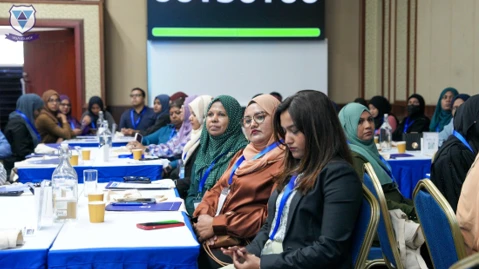
Through the systematic implementation of the Connected Curriculum Framework (CCF), Villa College has embedded sustainable development into the core of its academic identity, achieving full SDG mapping across 100% of its 218 active, MQA-approved degree programmes. By combining a mandatory college-wide sustainability module for all undergraduate students with domain-specific SDG embedding across every faculty, the institution ensures both universal foundational literacy and deep technical expertise tailored to the unique environmental and socio-economic challenges of Small Island Developing States (SIDS). This academic framework is further reinforced by rigorous, multi-tiered sustainability literacy assessments ranging from diagnostic entry benchmarking to specialized capstone audits which create an ongoing data-driven feedback loop for continuous curricular enhancement. Extending this educational mandate beyond campus, Villa College conducted 54 health outreach initiatives and over 85 educational outreach activities in 2025, deploying students, faculty, and alumni to deliver preventative healthcare, inclusive teaching, legal assistance, and public sustainability MOOCs. These combined efforts—supported by specialized centers such as the Institute for Research and
Innovation and the CIED Incubation Lab—ensure that Villa College equips its graduates to act as agents of sustainable change while actively driving health equity, lifelong learning, and community resilience across the Maldives.