A. International Research Projects and Data Initiatives
1. 3SWater Project – Community Water Data in Small Islands (SDG 6, 13):
Within the international 3SWater project on water sustainability in small island contexts, Master of Public Health students on 3SWater scholarships collected and analysed community data on water source preferences and trust. Saniyya Faheem’s research recorded misconceptions about desalinated water and safe rainwater practices. Asifa Luthfee’s study showed the role of island councils in public acceptance of safe water supply.
2. 7th Arab Water Week, Jordan – Sharing Maldivian Water Data (SDG 6, 13):
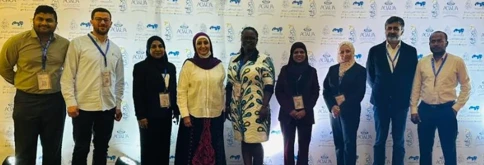
From 4 to 8 May 2025, Dr. Fazeela Ibrahim, Dr. Mamdooha Ismail and Dr. Aishath Selna presented the Maldivian component of the 3SWater project at the Dead Sea, Jordan, and attended the project’s meeting on final reporting and future research themes. This put Maldivian data into an international, multi-country dataset on water security.
3. Parliamentary Research with the Westminster Foundation for Democracy (SDG 5, 16):
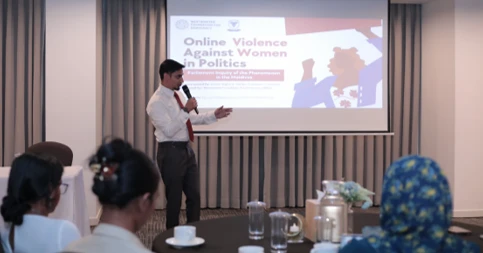
As research lead, Villa College collected and analysed national data on online violence against women in politics with the Westminster Foundation for Democracy (UK) and the Human Rights and Gender Committee. The findings were validated with stakeholders on 18 March 2025.
4. THE Impact Rankings 2025 – International SDG Measurement (SDG 17):
Villa College submitted institutional data across the SDG framework to the Times Higher Education Impact Rankings and became the first Maldivian institution ranked. This contributes Maldivian data to an international system that measures universities’ contributions to the SDGs.
5. Mental Health and Psychosocial Services Study – The Asia Foundation (SDG 3): With The Asia Foundation and the Maldivian Nurses Association, the College hosted the public dissemination of national findings from the study “Access and Experiences of Care: Mental Health and Psychosocial Services in the Maldives” on 10 December 2025, so that the data reached students, practitioners and policymakers.
6. DIGITAsia (Erasmus+) – Pilot Data on Digital Transformation in Teaching (SDG 4): With The Maldives National University and the Islamic University of Maldives, Villa College presented its pilot methodology and implementation plan for the EU co-funded DIGITAsia project. The pilot will produce comparable evidence on digital teaching practice across nine partner universities in Croatia, the Maldives, Sri Lanka, Spain and Malaysia.
B. International Conferences and Training on SDG Data and Measurement
7. 13th International School of Input-Output Analysis (SDG 8, 12, 13):
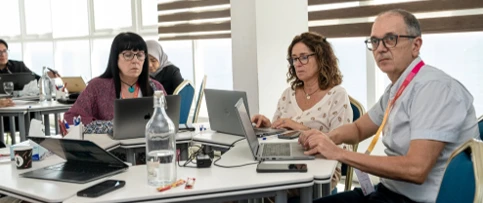
On 7 July 2025, the College hosted the 13th ISIOA, a full-day training for 115 international scholars on input-output methods used to measure global value chains, trade and embodied emissions. Trainers came from Shanghai Jiao Tong University, the Chinese Academy of Sciences and the OECD.
8. 31st IIOA Conference – Multi-Regional Data for Sustainable Development (SDG 8, 9, 12, 13, 17):
The 31st IIOA Conference brought 196 delegates from 38 countries to present more than 150 papers. Keynotes introduced new multi-regional input-output databases, including the “Emerging MRIO” database for measuring emissions in South–South trade, and Asian Development Bank work on economic data.

9. ICSRI 2025 – International Research Data across Eight SDG Tracks (SDG 3, 4, 8–11, 13, 16):
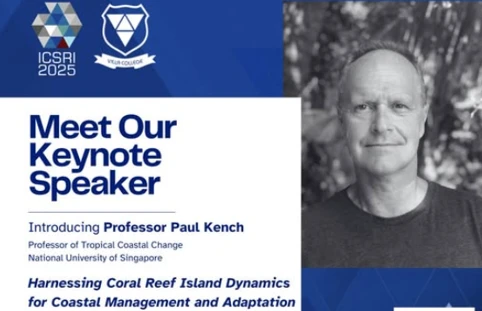
ICSRI 2025 presented more than 75 papers from Maldivian and international researchers across eight SDG-aligned tracks. Keynote speaker Professor Paul Kench (National University of Singapore) shared two decades of field data on how coral reef islands form and change, research that has informed national adaptation strategies in atoll nations.
11. First International Psychology Conference (SDG 3):
The conference on 12 October 2025 combined Villa College research with online presentations from universities in Indonesia, Australia, Saudi Arabia, the UAE, Pakistan, the UK and Portugal, comparing evidence on mental health and help-seeking.
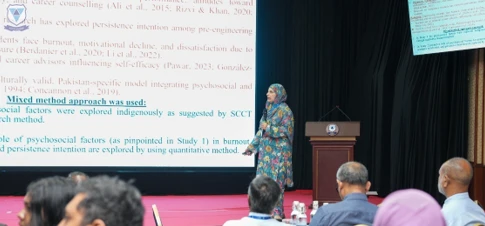
10. IMERC 2025 Research Bootcamp with Mayo Clinic (SDG 3):
Mayo Clinic researchers led a Research Bootcamp on research ethics and regulation and on observational, analytical and experimental study design. Maldivian clinicians and researchers learned internationally recognised methods for collecting health data.
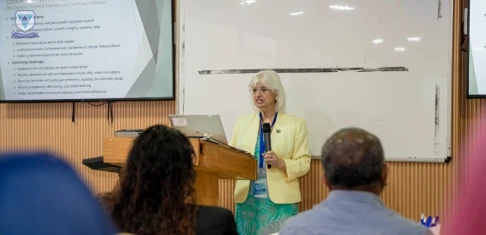
11. First International Psychology Conference (SDG 3):
The conference on 12 October 2025 combined Villa College research with online presentations from universities in Indonesia, Australia, Saudi Arabia, the UAE, Pakistan, the UK and Portugal, comparing evidence on mental health and help-seeking.
12. International Climate Change Law Conference (SDG 13, 14, 16):
On 10 December 2025, CTEM held an international conference with participants from ten countries, reviewing global evidence on climate governance and the transformative environmental rule of law.
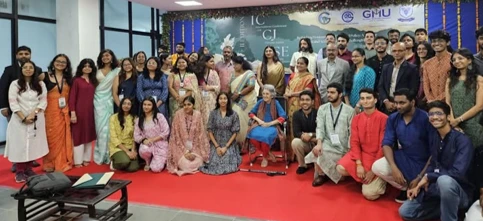
14. “Ocean – Sustaining What Sustains Us” Monograph (SDG 14):
CTEM’s 240-page, peer-reviewed ocean monograph brought together contributions from authors at Oxford, Milano, Ankara, London, Gujarat National Law University and the Japan Oceanographic Agency. It was presented on the sidelines of the UN Ocean Conference in 2025.
C. International Agreements Establishing Joint Research and Data Collaboration
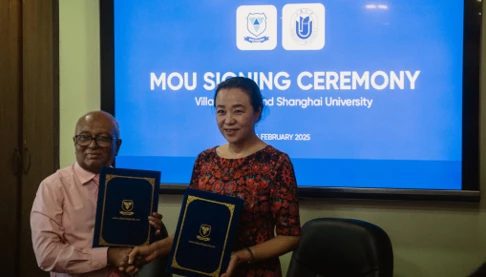
15. Shanghai University, China (SDG 4, 9, 17):
The MoU of 24 February 2025 covers joint research initiatives, conferences and faculty and student exchange. The signing delegation included the Vice Dean of the School of Environment & Chemical Engineering
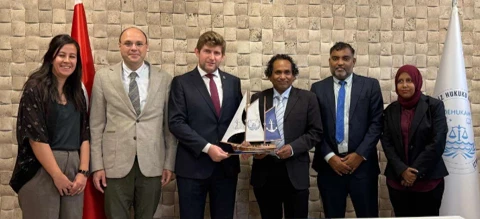
16. Ankara University DEHUKAM, Türkiye (SDG 14, 16):
The Cooperation Protocol of 16 June 2025 with the National Center for the Sea and Maritime Law sets up joint research and knowledge exchange on the Law of the Sea.
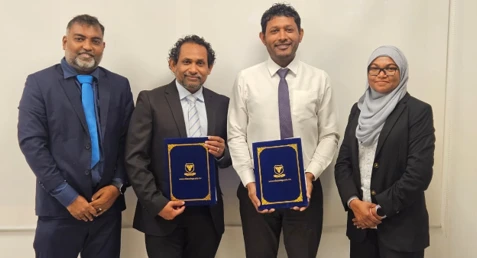
17. The Tree House International, Sri Lanka (SDG 3, 4, 10):
The MoU of 15 August 2025 provides for shared research on behaviour therapy and neurodevelopmental disorders, along with joint programmes and seminars.
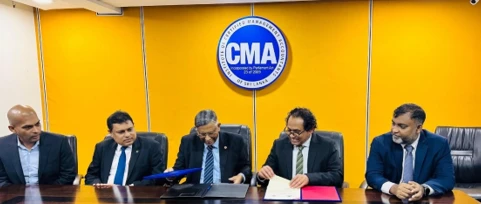
18. Institute of Certified Management Accountants of Sri Lanka (SDG 4, 8):
The MoU sets up joint research forums, seminars and workshops, and the exchange of academic resources between the Maldives and Sri Lanka.
19. Asia Pacific University, Malaysia (SDG 4, 9):
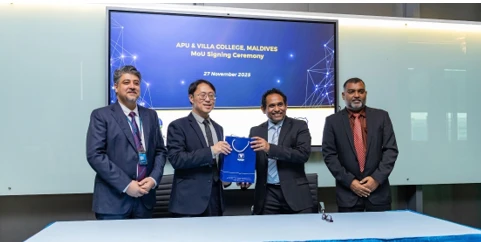
The MoU of 27 November 2025 covers collaborative research, the exchange of academic information and resources, and joint supervision of Master’s and doctoral students.
20. South Asian University, India (SDG 4, 17):
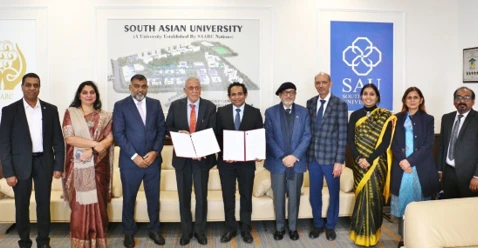
The MoU of 19 December 2025 creates a framework for joint research programmes and regional research activities supporting sustainable development across South Asia.
21. Galgotias University, India (SDG 4, 9):
The MoU signed in December 2025, establishes a comprehensive framework for cooperation that encompasses multiple dimensions of academic engagement. At its core, the partnership facilitates the exchange of students, faculty, and research staff between both institutions, creating dynamic pathways for knowledge transfer and cross-institutional learning. This framework extends to collaborative curriculum development, where both Villa College and Galgotias University will work together to design and deliver programmes that reflect global standards and industry relevance.