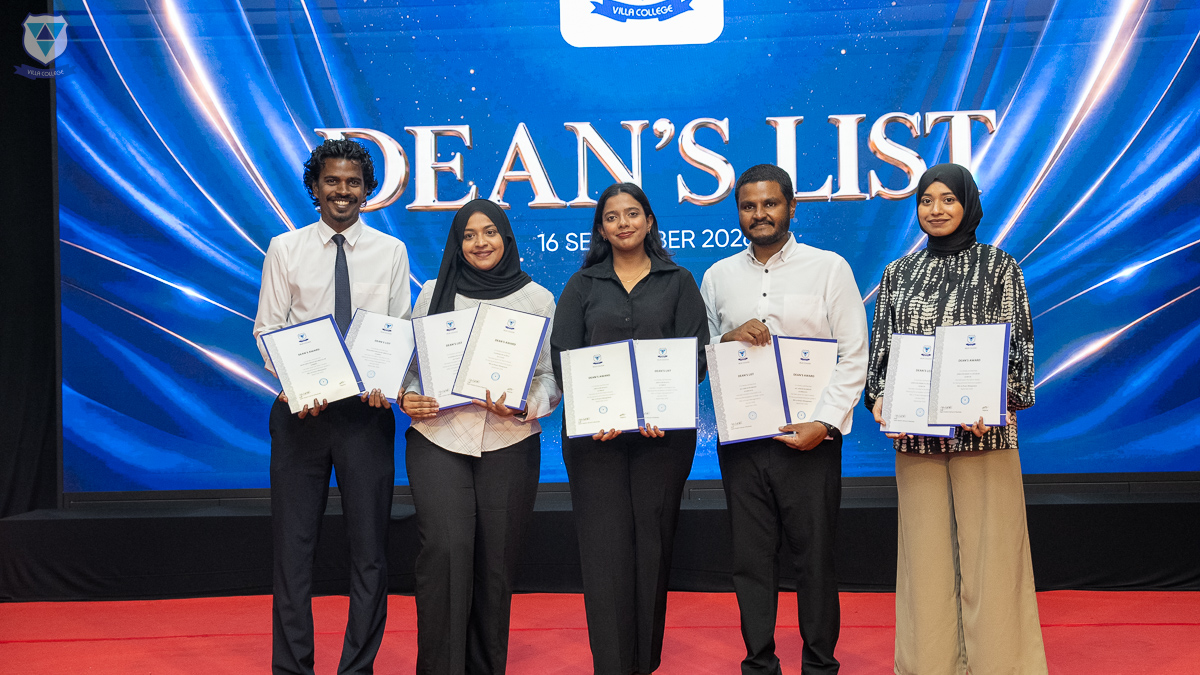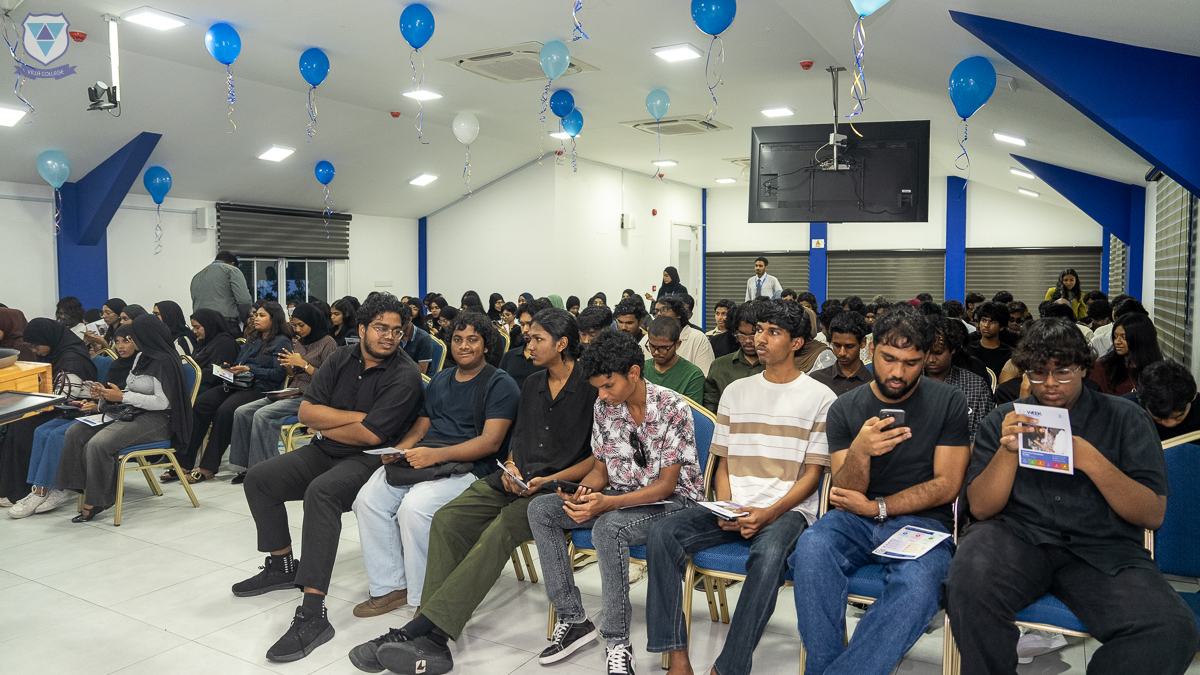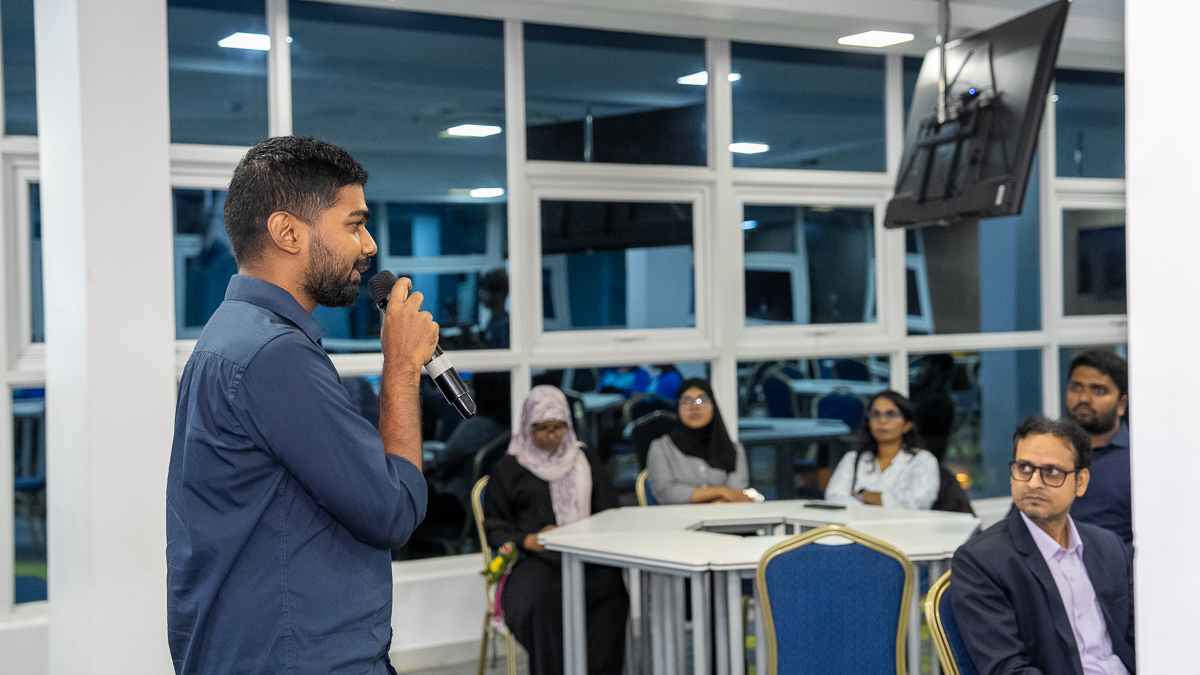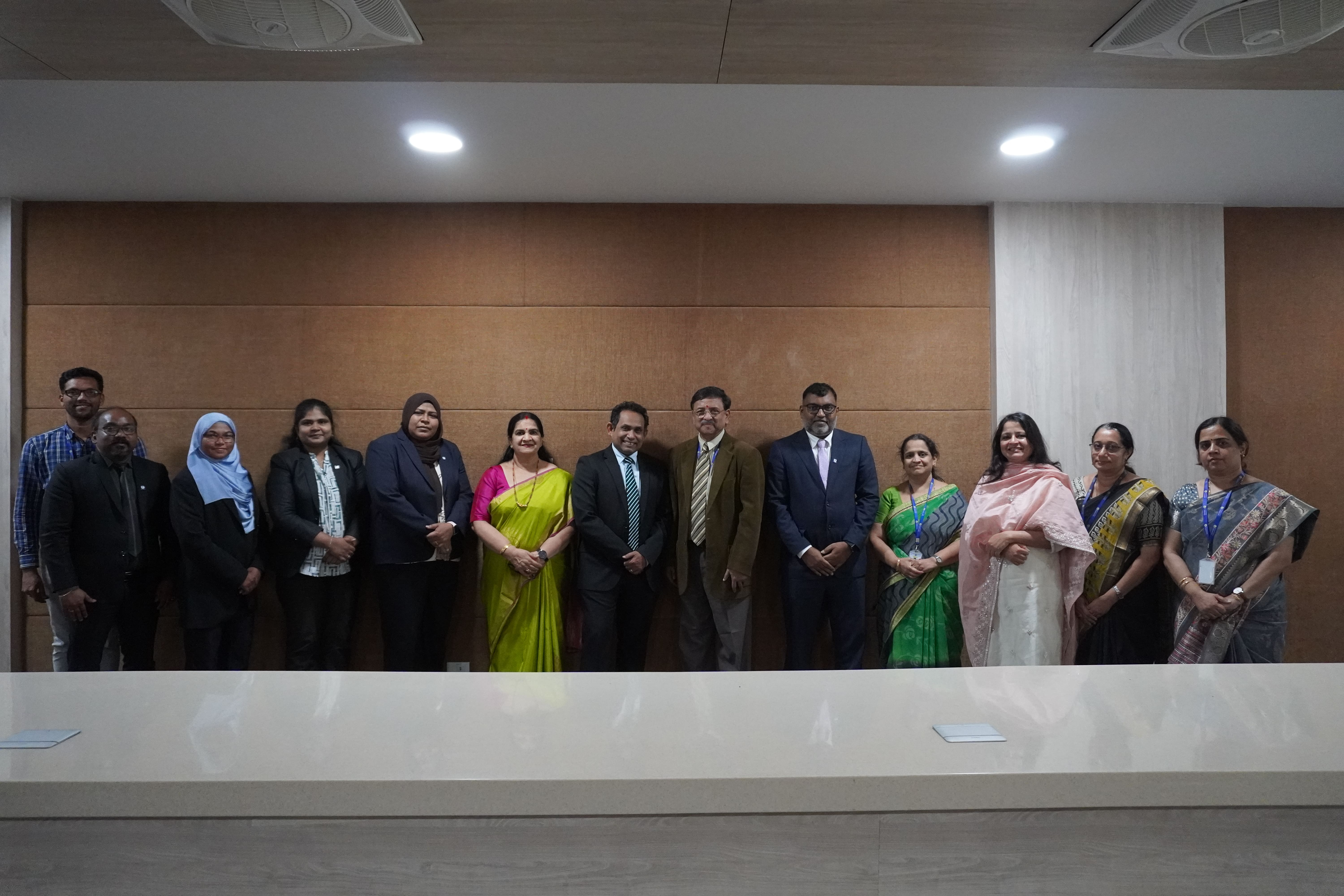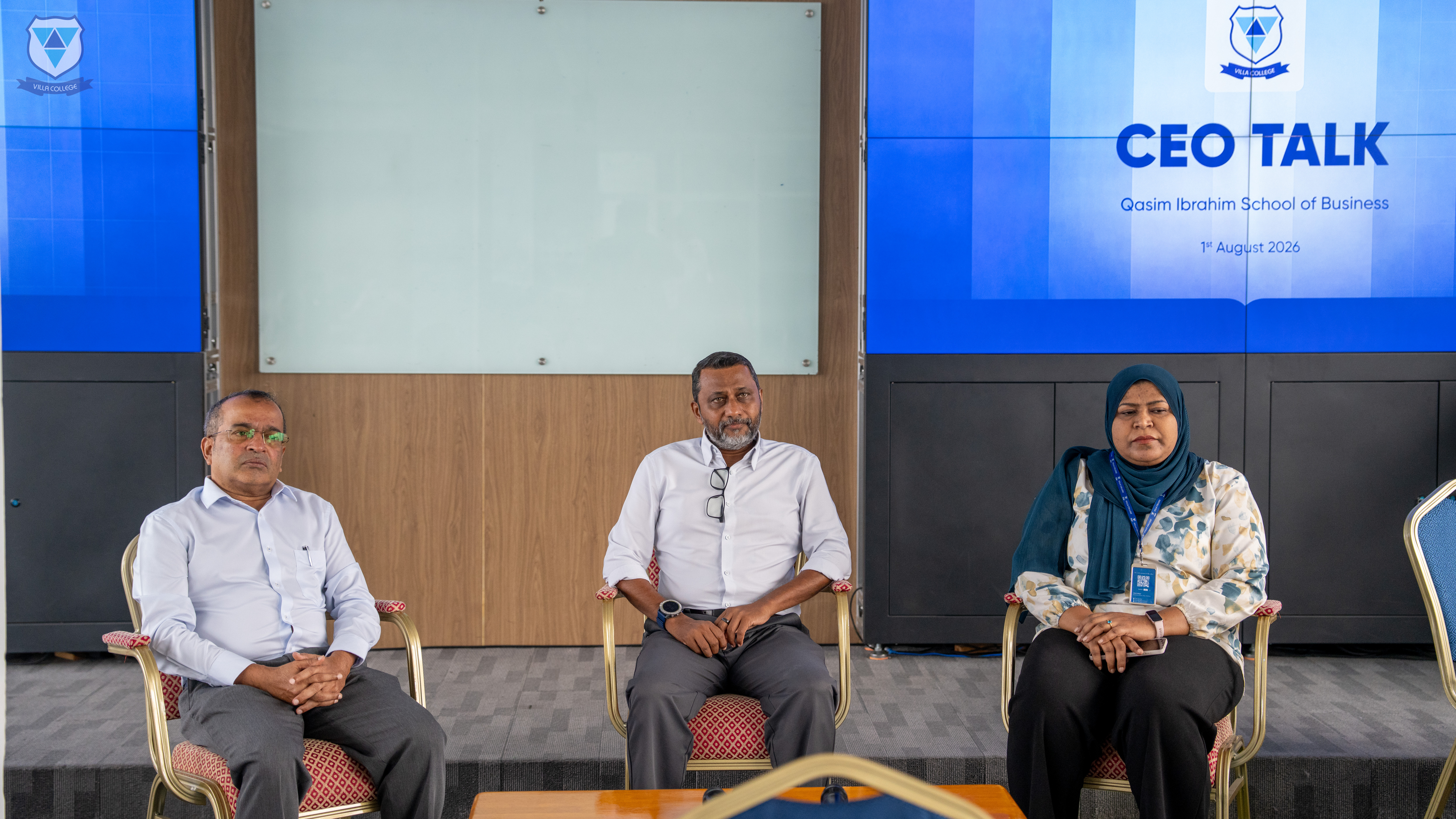
More than 140 postgraduate students, participating both online and in person, gathered at Villa College for the second session in 2026 of the CEO Talk Series (Exclusive Masters Series), hosted by the Qasim Ibrahim School of Business. The event was followed by an interactive workshop on personal branding, bringing together students from across the institution's postgraduate provision, including the Master of Business Administration programmes delivered by the University of the West of England and Villa College, the MSc in Project Management, the MSc in Accounting and Finance, the Master of Public Health, and the MSc in Nursing. The keynote conversation was delivered by Mr. Ahmed Afaal, Managing Director of ADK Hospital, who subsequently joined a panel discussion alongside Mr. Abdulla Nafiz, Dean of the Qasim Ibrahim School of Business, and Ms. Aishath Mala, Dean of the Faculty of Health Sciences. The succeeding workshop was facilitated by Mr. Ibrahim Nasreen, widely known as Nattu, a former Managing Director of Public Service Media, academic, and PhD scholar. Together, these sessions examined how executive leadership operates in practice, exploring strategic management, corporate governance, organisational culture, and career progression.
A central theme of the event addressed the distinction between academic management theory and real-world executive decision-making. In a classroom setting, case studies present defined variables, bounded options, and historical outcomes that offer clear guidance. In contrast, operational execution inside an organisation provides no such certainty. Drawing upon more than three decades of executive leadership experience in tertiary healthcare management, Mr. Ahmed Afaal highlighted that senior leadership requires navigating complex strategic trade-offs, evaluating risk, and ensuring long-term organisational sustainability without the luxury of hindsight. Theoretical frameworks remain valuable tools for structuring analytical judgement, but they cannot function as substitutes for leadership intuition and practical decision-making. Senior leaders must continuously examine the implicit assumptions underlying any chosen framework before applying it to live operational challenges, ensuring that strategic choices align with immediate operational realities and broader institutional objectives.
The panel discussion further explored corporate governance, board dynamics, and leadership resilience, focusing on the persistent tension between short-term operational targets and long-term strategic transformation. Executive leaders are frequently required to meet immediate performance demands while simultaneously allocating resources toward initiatives such as digital transformation, where returns may accrue gradually across multiple reporting periods. Navigating this balance presents distinct organisational challenges. Deferring long-term investments preserves immediate financial results but risks degrading competitive capabilities over time, whereas pursuing transformation without demonstrating interim progress can exhaust stakeholder and board confidence. Managing this dynamic requires an approach similar to renovating an occupied building, where operational activities must continue uninterrupted while foundational upgrades are implemented. To maintain alignment, senior executives must pair technical transformation strategies with clear communication strategies, establishing transparent interim milestones that make incremental progress legible to governing boards and key stakeholders.
The discussion around organisational design and culture emphasised that leadership principles take on heightened significance within complex operational environments like healthcare. In tertiary healthcare settings, building high-performing teams, driving innovation, and managing change directly influence clinical outcomes and patient care, extending far beyond routine operational efficiency. This reality is clearly illustrated in the approach an organisation takes toward quality accreditation. When treated merely as a periodic examination, compliance remains temporary and declines once evaluations conclude. Conversely, when accreditation standards are integrated into daily operational routines, quality becomes embedded within the organisational culture, rendering formal assessments a procedural reflection of existing practices. Furthermore, leadership responsibilities extend beyond internal operations into the broader community. Mr. Afaal's involvement in community health initiatives, including We Run Maldives, alongside the participation of Dean Aishath Mala and students from public health and nursing disciplines, highlights the strong interconnection between business management, healthcare delivery, and community well-being.
The session concluded with an interactive workshop on personal branding, shifting the focus from institutional strategy to individual career progression. Facilitated by Mr. Ibrahim Nasreen, the workshop addressed common misconceptions surrounding personal branding, distinguishing genuine professional positioning from superficial self-promotion. Effective personal branding represents the deliberate alignment between an executive's actual expertise and the recognition of that expertise by peers, employers, and professional networks. While technical competence grants entry into leadership consideration, executive career progression relies heavily on the ability to communicate strategic perspectives persuasively to boards, teams, and external stakeholders. By developing consistent professional outputs and clear communication habits, aspiring leaders can shape their reputation intentionally rather than leaving professional recognition to chance.
By integrating executive panel insights with practical personal branding strategies, Villa College demonstrates its commitment to connecting academic study with the practical exercise of leadership. Across business, healthcare, public administration, and project delivery in the Maldives, senior management positions require both rigorous strategic thinking and effective executive communication. The CEO Talk Series provides postgraduate students with direct access to senior leaders who have managed operational complexity and organisational governance firsthand. Through such initiatives, the Qasim Ibrahim School of Business continues to foster an innovative, nurturing, and academically rigorous environment, equipping future executives with the analytical tools, leadership resilience, and professional clarity necessary to lead sustainable organisations.