Key Best-Practice Collaborations in 2025
1. DIGITAsia (Erasmus+): Education 5.0 and Universal Design for Learning (SDG 4, 9, 10):
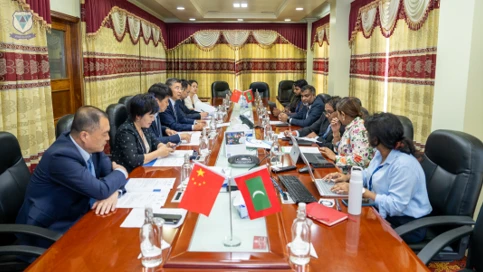
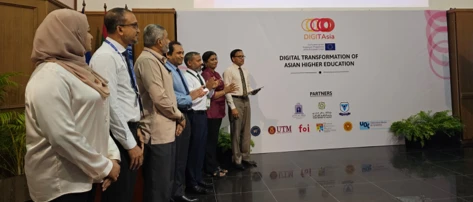
Villa College, The Maldives National University and the Islamic University of Maldives launched DIGITAsia on 25 February 2025. The EU co-funded project brings together nine universities from Croatia, the Maldives, Sri Lanka, Spain and Malaysia.
After the kickoff in Sri Lanka, Villa College hosted the second project meeting in October 2025, where 54 participants presented Capstone Projects (report). European partners led by the University of Zagreb trained academics to redesign real modules using Education 5.0 and Universal Design for Learning (UDL), and the University of Peradeniya presented the training roadmap for partner institutions. Students in the Maldives are spread across many islands, so flexible, accessible, technology-enabled teaching is essential for equitable access. Certified participants will now train other educators to redesign their modules, and the College has presented its own pilot implementation plan.
Best Practice Sharing Mechanism: The multi-institutional collaboration utilizes European partner expertise to train academics in redesigning modules via Universal Design for Learning (UDL) and Education 5.0 frameworks. A cascade training model ensures certified staff benchmark and share these accessible, tech-enabled pedagogical standards across all island campuses.
2. Regional Erasmus+ Cluster Meeting – Education for the Green Transition (SDG 4, 13):
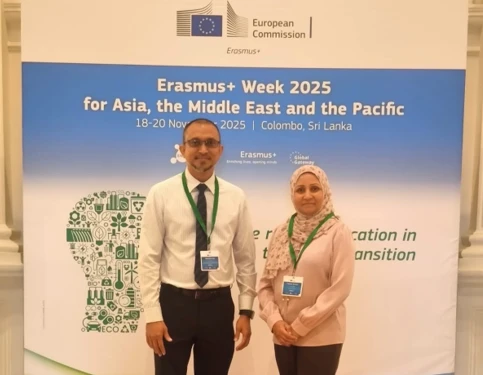
From 18 to 20 November 2025, Dr. Mohamed Adil and Dr. Fazeela Ibrahim represented the College at the Regional Erasmus+ Cluster Meeting and Contact-Making Seminar in Colombo, with EU Delegations, the European Commission and the European Education and Culture Executive Agency. Structured peer review of Erasmus+ projects and partner-matching across Asian institutions. The Maldives is among the countries most exposed to climate change, so learning how other systems build green-transition skills into higher education is directly relevant: The College used the seminar to form partnerships for joint Erasmus+ proposals in the 2026 call.
Best Practice Sharing Mechanism: The initiative employs a structured peer-review mechanism to benchmark Asian regional approaches for embedding green-transition skills into higher education curricula. This collaborative exchange enables the institution to adapt international environmental education frameworks to small-island climate realities.
3. APQN 2025 – Quality Assurance Benchmarking (SDG 4):
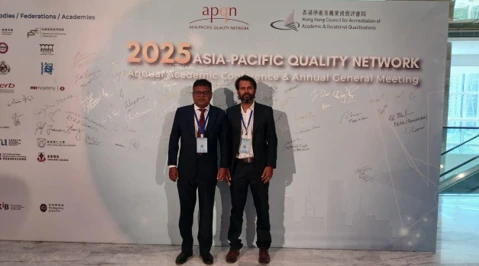
Dr. Abdulla Sadiq and Moosa Mohamed Manik represented Villa College at the APQN 2025 Conference in Hong Kong SAR (20–23 November).
Comparison of quality assurance standards and industry-collaboration models used by quality agencies and institutions across the Asia-Pacific. Benchmarking against regional standards helps keep Maldivian qualifications credible and internationally recognised. The insights feed the Institute for Academic Development’s internal quality assurance and programme review.
Best Practice Sharing Mechanism: The collaboration leverages Asia-Pacific regional conferences to benchmark institutional quality assurance and industry-collaboration standards against international quality agencies. The resulting comparative insights are systematically integrated into internal academic development and review processes.
4. IMERC 2025 with Mayo Clinic – Global Clinical Standards (SDG 3, 4):
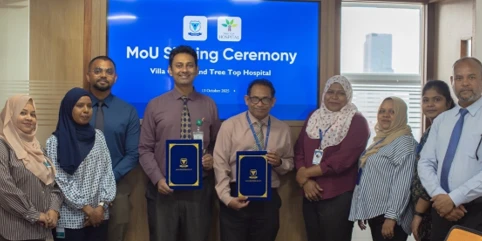
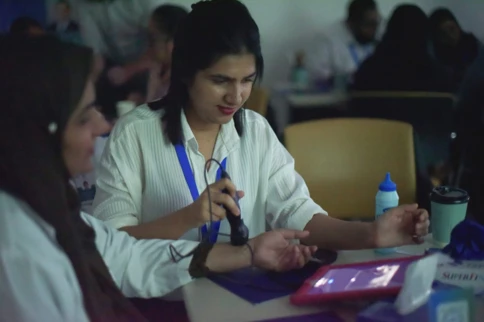
Through the IMERC 2025 collaboration with Mayo Clinic (USA), IGMH and Tree Top Hospital, Mayo Clinic specialists ran hands-on workshops in point-of-care ultrasound, CPR, physical examination and dive medicine.
Direct transfer of clinical protocols and simulation-based teaching from an international leader in medical education. With a small, dispersed health workforce and a tourism economy built on diving, the Maldives needs internationally benchmarked emergency and dive-medicine skills. Villa College faculty co-facilitated the workshops alongside Mayo Clinic experts, building in-house capacity to keep teaching these protocols.
Best Practice Sharing Mechanism: The partnership features direct knowledge transfer and co-facilitated simulation workshops with global medical leaders to establish international emergency and dive-medicine protocols. Joint delivery with Mayo Clinic experts builds sustained in-house capacity to maintain and teach global clinical standards locally.
5. Comparative Ocean and Climate Law (SDG 13, 14, 16):
CTEM published the peer-reviewed monograph “Ocean – Sustaining What Sustains Us” with international co-authors, partnered with Gujarat National Law University on climate change law, signed a Cooperation Protocol with Ankara University’s DEHUKAM and held an International Climate Change Law Conference with participants from ten countries.
Comparative legal research and joint scholarship on ocean governance, climate litigation and the Law of the Sea. Climate and ocean law developed in large states often does not reflect the realities of small island developing states, whose survival depends on maritime rights and climate justice. The findings inform CTEM’s teaching, the Faculty of Shariah and Law’s postgraduate research and the College’s contributions to policy dialogue.
Best Practice Sharing Mechanism: The mechanism relies on international joint scholarship, peer-reviewed monographs, and cross-border legal conferences to benchmark ocean governance and climate litigation frameworks. This comparative legal research adapts global Law of the Sea standards to address the specific climate justice needs of Small Island Developing States.
6. Comparative Policy Learning: Waqf for Sustainable Development (SDG 1, 10):
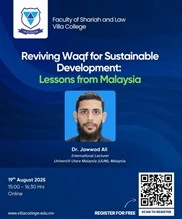
The Faculty of Shariah and Law hosted a free public lecture, “Reviving Waqf for Sustainable Development: Lessons from Malaysia”, by Dr. Jawwad Ali of Universiti Utara Malaysia.
A structured review of Malaysia’s legal and institutional model for managing Islamic endowments. Waqf is a culturally appropriate, sustainable source of financing for social welfare in a Muslim-majority country, but it is underused in the Maldives. The Malaysian model is a reference point for Islamic finance teaching and for future policy discussion on waqf reform.
Best Practice Sharing Mechanism: The collaboration applies a comparative policy analysis approach to evaluate Malaysia's legal and institutional framework for managing Islamic endowments (Waqf). Insights from this established regional model are used to benchmark domestic Islamic finance curricula and inform national policy discussions.