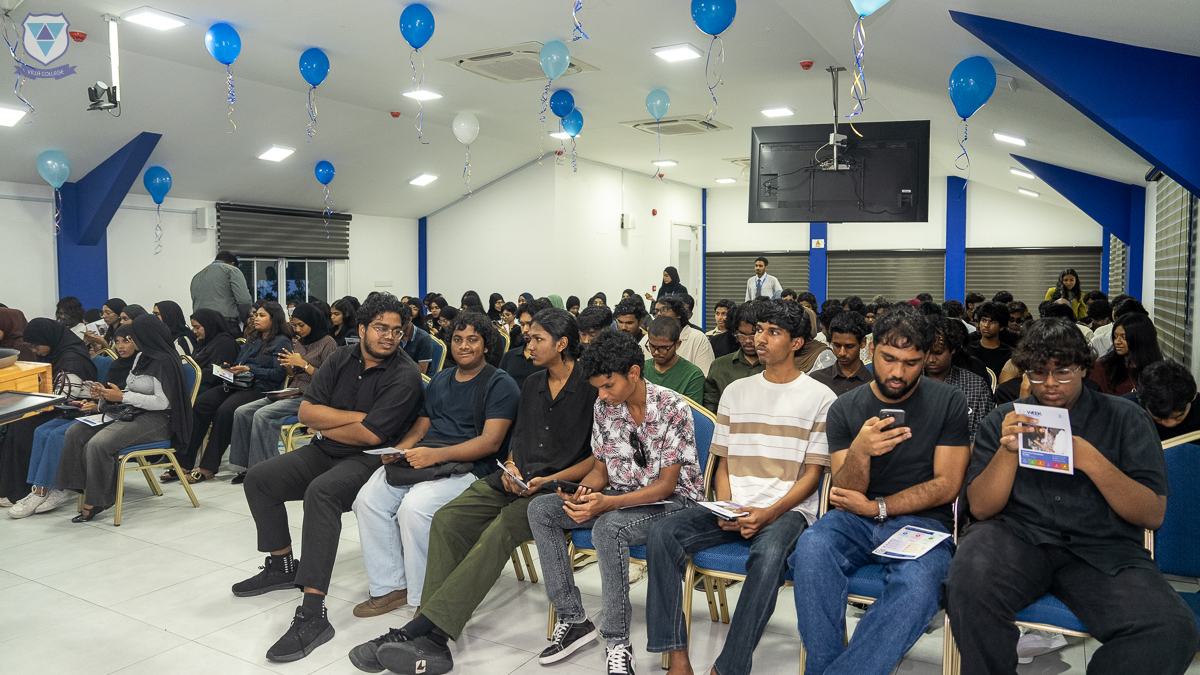
Villa College has concluded its comprehensive Orientation Week, known as O-Week 2026, welcoming the September 2026 intake across its physical campus and digital learning environments. Held from 14 to 16 September 2026, between 16:00 and 22:00 each day, the three-day programme was structured to transition incoming students into higher education through systematic institutional familiarisation, academic advisory services, and operational onboarding prior to the start of formal lectures. By bridging administrative preparation with long-term professional development, the institution reinforced its commitment to producing well-adjusted, workforce-ready graduates.
A central theme of the orientation was the alignment of academic study with the evolving demands of the modern employment market. In the opening session, titled Unlocking Your Potential, Villa College Vice Rector Associate Professor Dr Ali Najeeb outlined the essential competencies, professional networks, and societal responsibilities expected of contemporary graduates. This vocational grounding was reinforced through collaborative sessions with industry stakeholders and alumni. In the End Game sessions, employers from diverse economic sectors presented direct overviews of the critical skills sought by modern enterprises, whilst the Beyond the Classroom sessions enabled former graduates to share strategic insights into managing academic workloads and building sustainable career pathways.
Academic acclimatisation and institutional navigation formed another core component of the onboarding framework. Students engaged directly with faculty leaders, academic counselling staff, and course lecturers to establish clear educational trajectories. Targeted workshops, including Ace Your Academics and Study Smarter, Work Better, provided students with disciplined learning methodologies, cognitive tools, and time-management techniques required for tertiary study. Parallel to these academic discussions, the Get Digitally Ready initiative addressed operational integration by activating student digital identification, configuring online learning platforms, and granting network access. To facilitate on-campus orientation, students participated in the VC Mystery challenge, a collaborative exercise designed to familiarise teams with physical laboratories, administrative hubs, and library resources.
Recognising that sustained academic performance requires personal equilibrium, the college embedded dedicated wellbeing modules into the schedule. The Stay Well, Stay Balanced workshops guided students through physical health maintenance, stress management techniques, and the balance required between independent study and personal life. Concurrently, social cohesion was fostered through recreational activities, live music, karaoke, and dedicated virtual alternatives for remote learners. Reflecting on the O-week, Dr Najeeb noted that the peer networks and interpersonal connections established during this initial period serve as a primary support mechanism during challenging academic stages.
Through this balanced execution of academic planning, digital enablement, and social integration, Villa College demonstrated an institutional framework focused on early student retention and sustainable achievement. By addressing both the structural requirements of higher education and the practical expectations of employers, O-Week 2026 provided the incoming cohort with the foundation necessary to navigate their studies effectively and contribute meaningfully to the wider community.