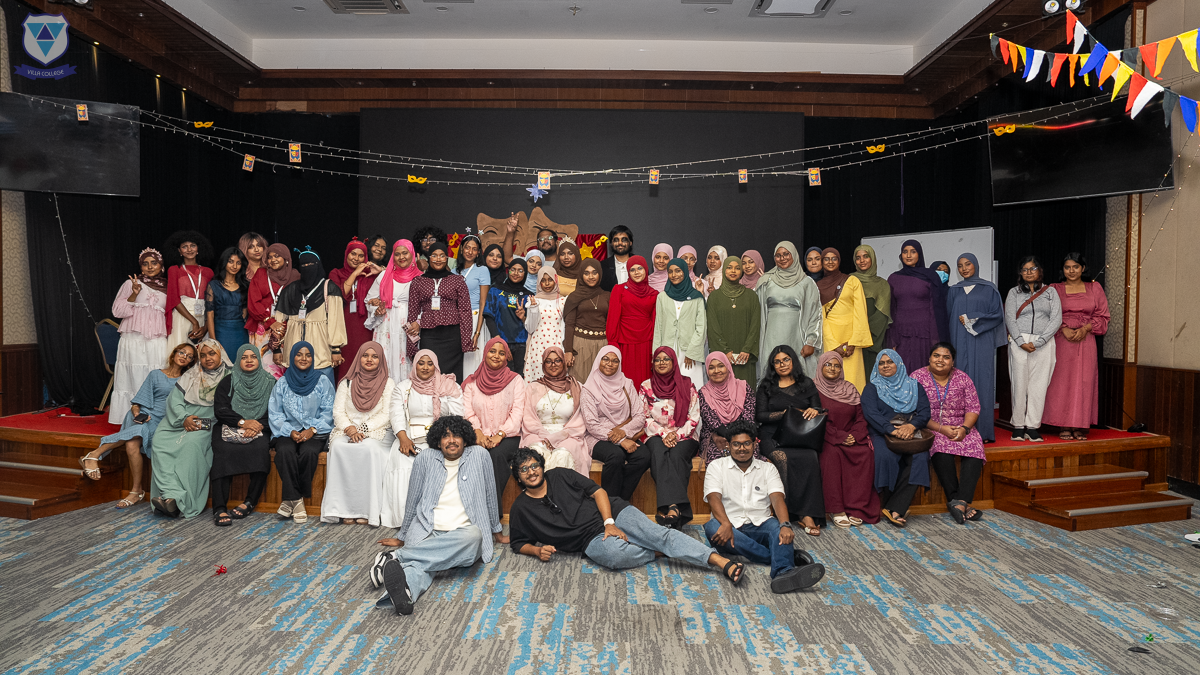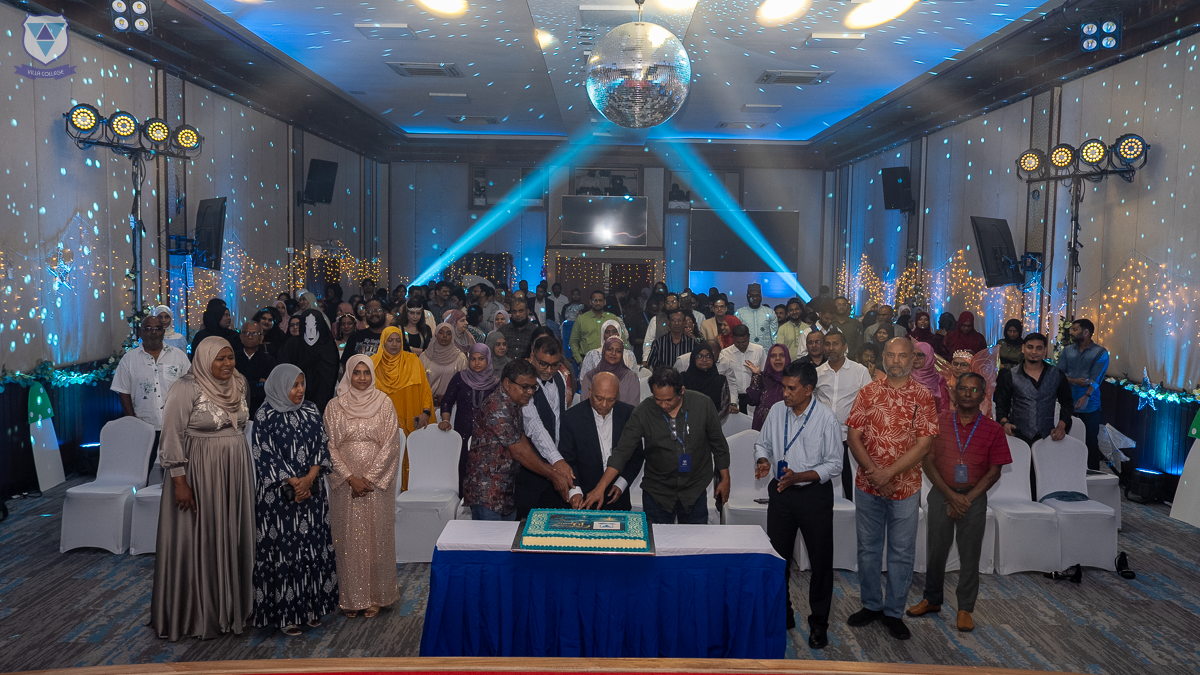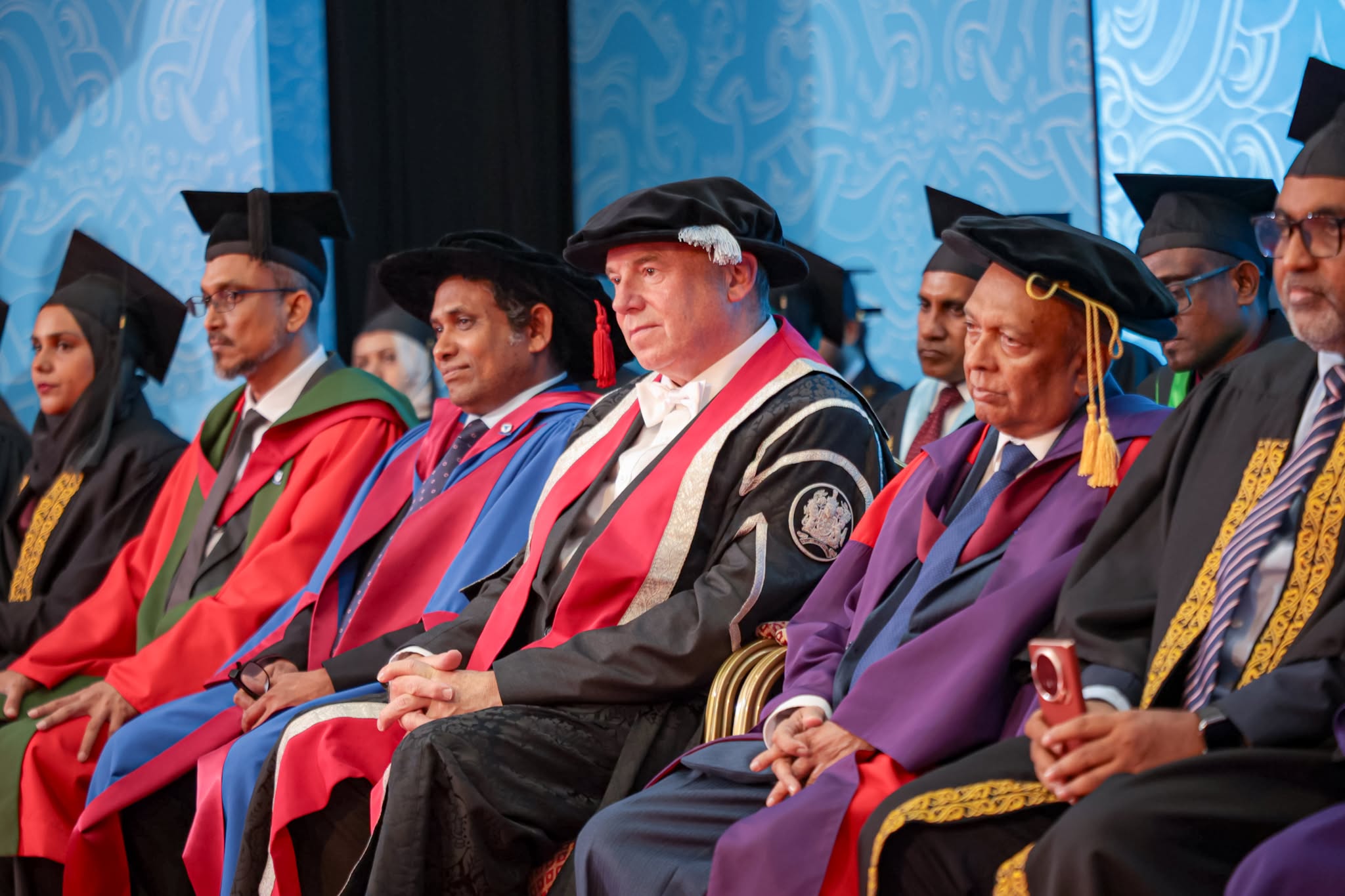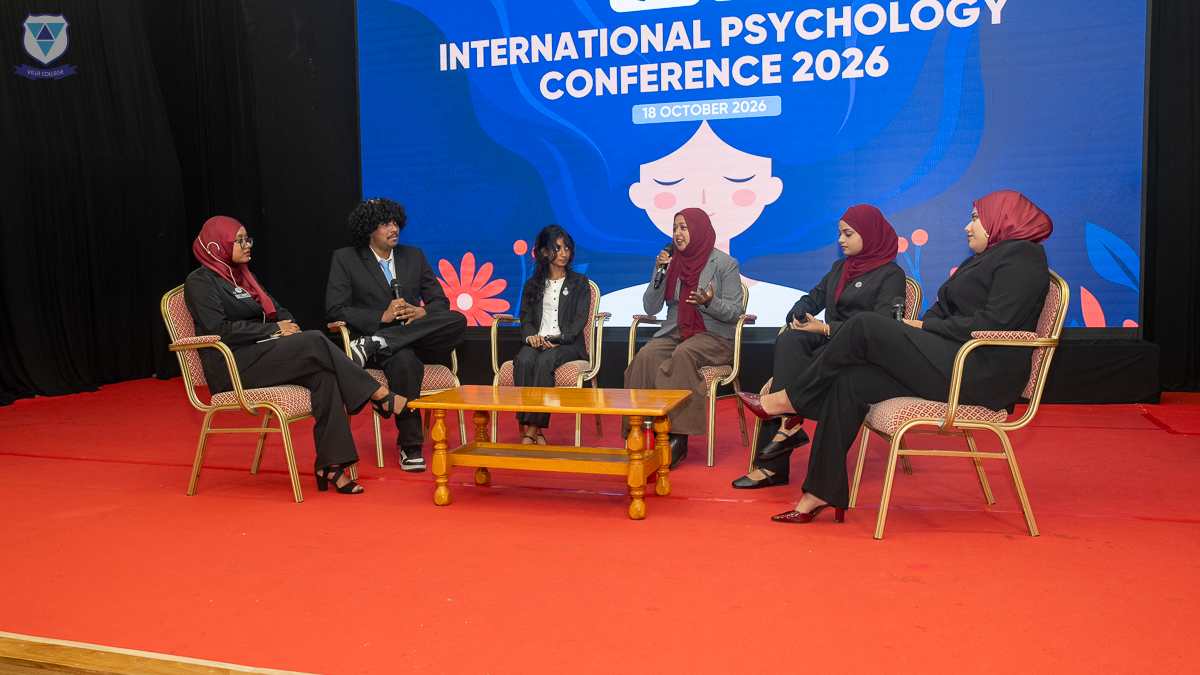
The second International Psychology Conference, hosted at Villa College QI Campus in Malé, brought together researchers, practitioners, and student scholars to examine how environmental systems, institutional structures, and interpersonal dynamics govern human performance and well-being. Following opening remarks by Dr Aishath Nasheeda and the launch of Psychology Bulletins 13, 14, and 15 by the Rector of Villa College, Dr Ahmad Anwar, the conference presented twenty-three contributions from institutions across the Maldives, Pakistan, India, Saudi Arabia, North Macedonia, and Bulgaria. Spanning two keynote addresses, three flash talks, and an undergraduate student panel titled ‘Lived Experiences, Real Voices, Real Change’, the proceedings delivered an evidence-based perspective on modern psychosocial challenges.
Opening keynote
Sidra Akhtar, a doctoral candidate at the University of Haripur, Pakistan, opened the academic programme with a quasi-experimental study of Motivational Enhancement Therapy for men in substance use rehabilitation. Four weekly sessions produced large reductions in depression and anxiety compared with a waiting-list group, and the study recommended routine screening at intake and integrated care that treats psychological distress alongside addiction.
Macro-risk, public safety, and professional burnout
Dr Wizra Saeed, Dr Ulfat Nisa, and Qubsha Munir examined how university students responded to the 2024 Islamabad hailstorm, finding that perceived stress, rather than death anxiety, predicted a more pessimistic outlook. Moosa Shan of Villa College investigated age and motorcycle accidents in the Maldives, showing that younger riders reported riskier riding but did not have significantly more accidents, and that risky behaviour rather than age was linked to accident frequency. Marrium Akbar and Tehmeena Hanif of the National University of Modern Languages, Islamabad, found that better work-life balance was strongly associated with lower burnout among lawyers in Pakistan, with emotional intelligence partly explaining the relationship.
In the first flash talk, Ismail Shiyar (Master of Clinical Psychology, University of Cyberjaya and Villa College) asked why seeking help is harder for some people than others, outlining a proposed study of whether adult attachment style and emotion regulation shape readiness for psychotherapy among adults in Greater Malé. Khushi Rathi and Dhwani Badia of Jesus and Mary College, University of Delhi, explored the work and cultural values of Indian youth, identifying working surroundings as the strongest predictor of individual innovativeness, while greater acceptance of hierarchical authority was associated with lower innovativeness.
Student panel
The morning closed with the student panel ‘Lived Experiences, Real Voices, Real Change’, moderated by third-year student Thuga Shameem, with Bachelor of Psychology students Alau Bin Mohamed Haneef, Aminath Yumna Waheed, Khadeeja Faiha, Maryam Jaisha Ibrahim, and Sara Maysam Rasheed, spanning first-year to final-year students.
Corporate readiness and educational experience
Aminath Azra Moosa of Villa College explored the experiences of teachers in inclusive classrooms in the Greater Malé area, highlighting the need for practical training, adequate resources, and institutional support alongside the pressures of workload and classroom management. Aelia Zaidi and Professor Amena Zehra Ali of the University of Karachi examined career aspirations and career decision-making self-efficacy among university students, finding that self-efficacy was linked to all three types of aspiration measured but most weakly to leadership. Bashma Fathuhulla of Villa College found a strong inverse relationship between satisfaction with an academic major and regret about choosing it, regardless of year of study or whether the major was in a STEM field. In a flash talk, Nalyfa Asim examined bite-sized learning in the Maldivian hospitality sector, finding it closely linked to training effectiveness, which was in turn linked to employee performance, with performance linked to service quality, and concluding that learning should fit the need rather than simply be shorter.
Family dynamics and caregiver burdens
Manahil Atiq ur Rehman, Tabinda Shah, Naveed Ahmed, and Manal Salahuddin of Bahria University explored maternal guilt among working and non-working mothers in Karachi, finding no meaningful difference in its extent, although its sources differed. Aishath Hishma of Villa College examined maternal parentification in Maldivian families, finding it associated with more conflict in mother-child relationships but not significantly related to closeness. Qubsha Munir, Dr Ulfat Nisa, and Dr Wizra Saeed explored how caring for elderly relatives affects women in Pakistan, describing emotional exhaustion, disrupted personal and professional lives, and the strain of unequal family support. In a flash talk, Aaisha Afra Anwar presented the lived experiences of Maldivian married women navigating conflict with in-laws, identifying the husband’s response as pivotal to marital satisfaction.
Youth identity, digital stress, and self-perception
Keerthana Zacharia M examined upward social comparison among young adults, finding it associated with greater body dissatisfaction and lower self-esteem. Rimsha Aftab of the University of Karachi studied body dissatisfaction among gym-going females in Karachi, linking it to BMI, perceived physical changes, and dietary preferences. Mahnoor Akram and Muqadas Fatima of the National University of Modern Languages, Lahore, found that higher digital stress among young adults in Pakistan was associated with lower mindfulness, and recommended mindfulness-based programmes and education on digital habits.
Stigma, vulnerable populations, and psychological interventions
Azeem Dana of Presidency University presented a narrative review of 33 studies on bullying, cyberbullying, and other dominating behaviours, tracing their links to depression and suicide risk across schools, workplaces, digital spaces, and intimate relationships, and calling for prevention at community, digital, and clinical levels. Aminath Leem of Villa College found no significant relationship between parenting styles and sibling conflict among Maldivian young adults, suggesting that sibling conflict has multiple causes. Ayesha Munir, Dr Ulfat Nisa, and Dr Wizra Saeed explored how older adults in Pakistan navigate mental health services, identifying stigma, cost, low awareness, and fading family support as barriers and calling for culturally competent, faith-sensitive care. Fatime Ziberi and Dr Zlatina Georgieva examined resilience and coping among students at International Balkan University in North Macedonia, finding that students who used university psychological support services improved in resilience and reported lower academic stress afterwards. Atla Srinivas Reddy and Dr B. Rajani Devi reported that an eight-week Rajyoga Meditation programme improved emotional well-being among secondary school students in India compared with a control group.
Closing keynote and reflections
The closing keynote by Dr Sidra Shoaib of DHA Suffa University, Karachi, revisited the typology of academic dishonesty through qualitative interviews with university students, showing that dishonesty is perceived not only among students but also among faculty members, academic leaders, and administrative staff, and calling for context-specific strategies. The conference concluded with a reflection from the Vice Rector, Associate Professor Dr Ali Najeeb, and closing remarks from Thuga Shameem, President of the Psychology Association of Villa College and Psi Chi.