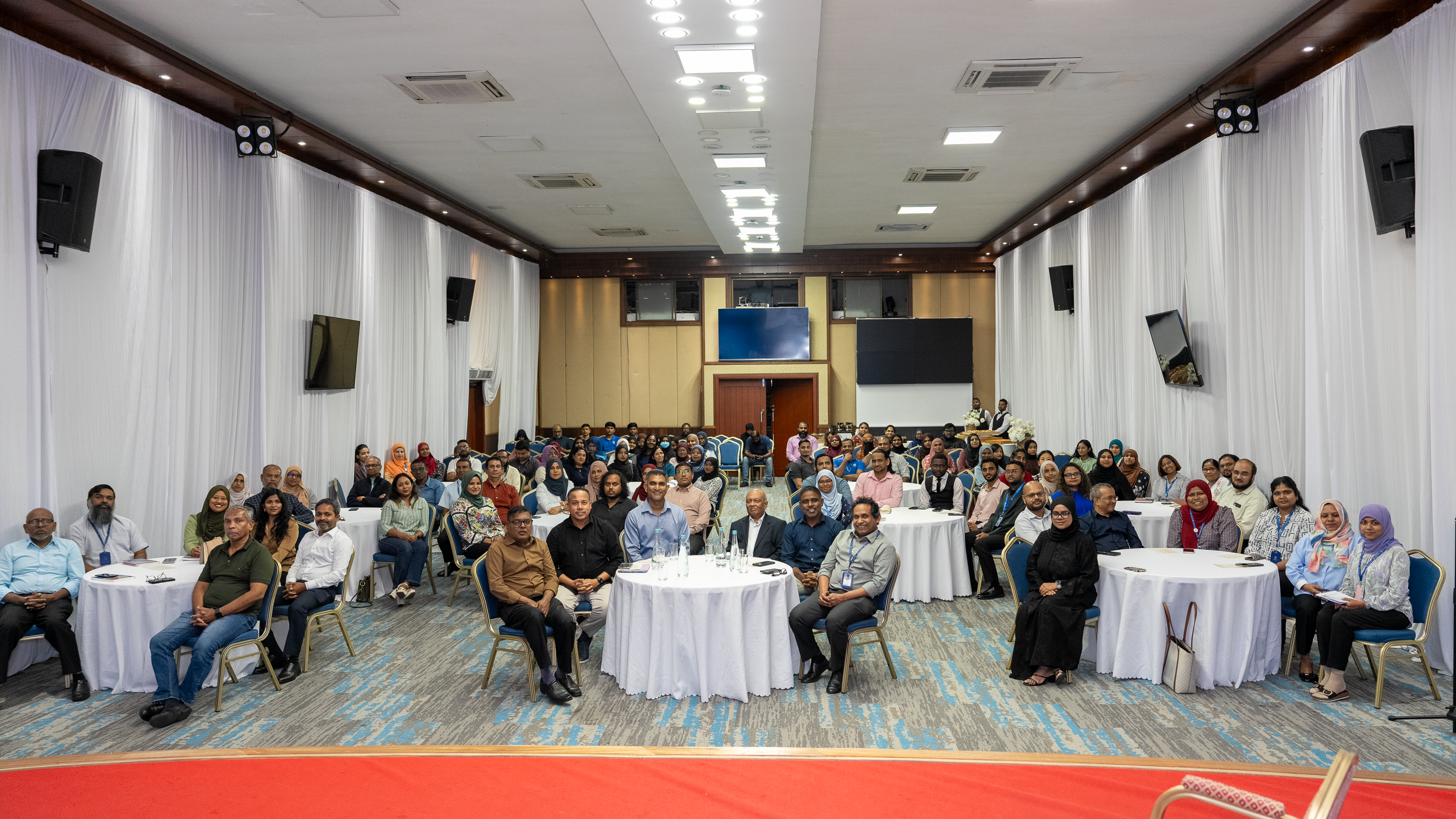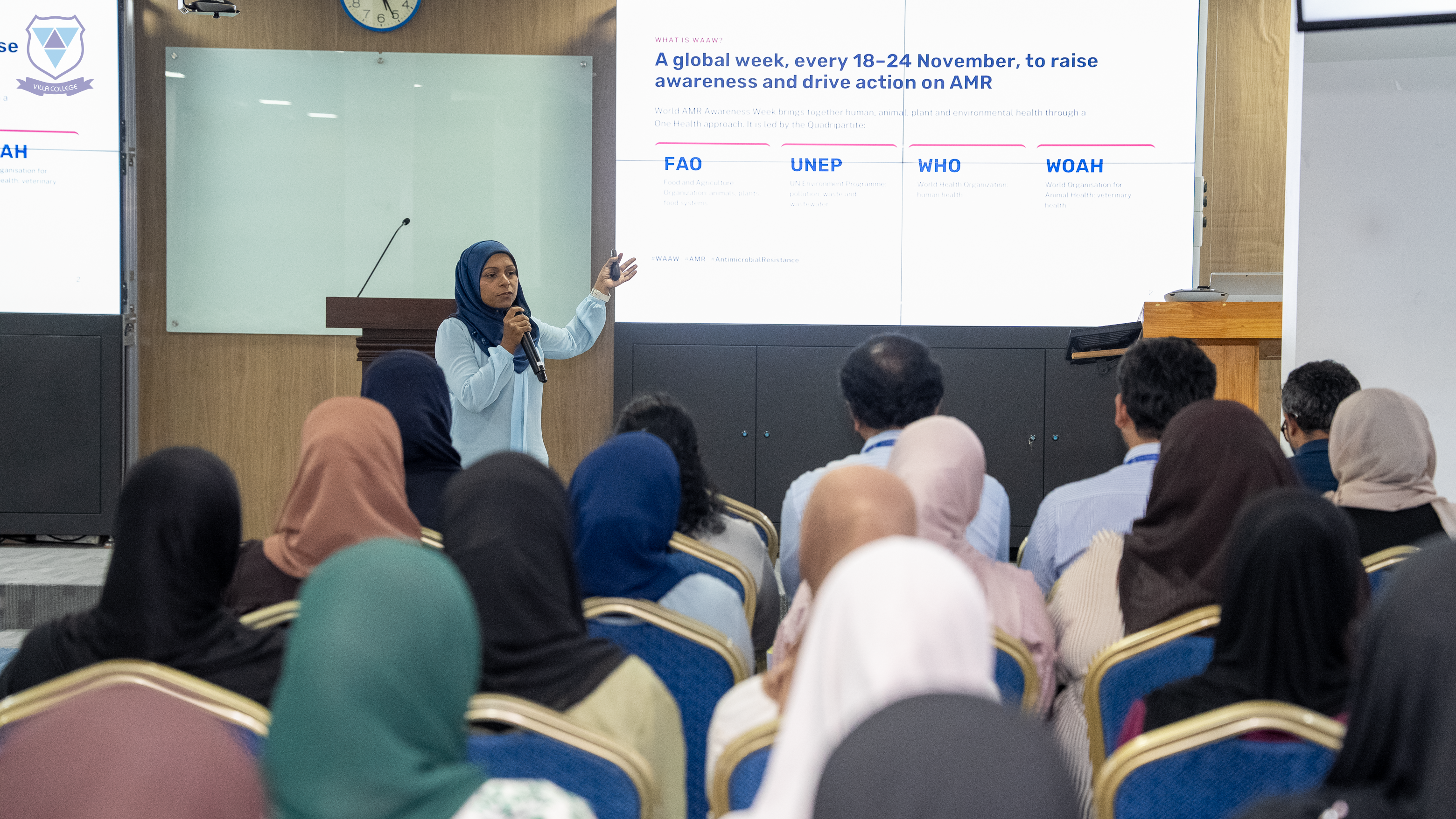
On 24 November 2026, the Faculty of Health Sciences at Villa College collaborated with the Maldives Food and Drug Authority (MFDA) to host an Antimicrobial Resistance Awareness Session at the Ocean View Hall, QI Campus. Held at 1700 hrs on the final day of World Antimicrobial Resistance (AMR) Awareness Week 2026, observed from 18 to 24 November, the event connected academic instruction with national regulatory practice. Facilitation by Aminath Moomina, National AMR Programme Manager at MFDA, and Ahmed Ziyad, National AMR Referral Laboratory and WHO GLASS Focal Point, grounded the session in national surveillance data, including findings from the National AMR Surveillance Report 2024. Bringing regulatory specialists directly into the campus environment illustrates how institutional partnerships bridge theoretical learning and frontline public health realities.
The session engaged students across four clinical pathways, comprising the Certificate 4 in Nursing, Diploma in Nursing, C4 Pharmacy, and Bachelor of Science in Nursing programmes, to strengthen their understanding of their responsibilities as future practitioners. Antimicrobial resistance develops when microorganisms adapt to withstand the medicines intended to eliminate them, much like a security system losing effectiveness when its safeguards are repeatedly compromised. In clinical practice, inconsistent prescribing or lapses in hygiene can accelerate resistance and endanger routine patient care, whereas disciplined antimicrobial stewardship paired with rigorous infection prevention and control preserves treatment reliability. Training future nurses and pharmacists together ensures that professionals dispensing medications and those administering care share unified standards before entering healthcare workplaces.
Beyond clinical boundaries, the facilitators examined how combating resistance requires a collaborative One Health approach linking human, animal, plant, and environmental health. Because resistant microbes move across ecosystems rather than remaining isolated inside hospitals, fragmented efforts within a single discipline cannot sustainably contain the risk. For healthcare employers, educators, and sector stakeholders, this perspective yields practical priorities: embedding national surveillance insights into professional curricula, maintaining strict infection control baselines across care facilities, and coordinating communication between regulators, prescribers, and community practitioners.
Through this initiative, Villa College reflects its commitment to developing socially responsible, knowledgeable, and competent healthcare professionals prepared for emerging public health challenges. The session also contributes directly to the United Nations Sustainable Development Goals, advancing Goal 3 on Good Health and Well-being, Goal 4 on Quality Education, and Goal 17 on Partnerships for the Goals. Villa College extends its sincere appreciation to the MFDA and the facilitators for their valuable contribution to educating and empowering the next generation of nursing and pharmacy professionals.