85+ Vocational Training Events in AY2025 | 1500+ Participant’s overall in all the training events | 21% Increase in the participants rate
Villa College continues to play a significant role in broadening access to vocational education and lifelong learning opportunities across the Maldives by delivering diverse training programmes that respond to the evolving skills development needs of various sectors. These initiatives are open to the public, industry professionals, and targeted community groups, aligning with Sustainable Development Goal 4 (Quality Education), SDG 8: Decent Work and Economic Growth, and SDG 17: Partnerships for the Goals by equipping learners with employable skills and supporting lifelong learning pathways.
Villa College sustained its contribution to Goal 4 during 2025 by broadening the portfolio of non-credit-bearing vocational and lifelong learning opportunities for those not attending the College’s regular courses. In addition to the training initiatives, this year was marked by new national and international partnerships, including the launch of the SAILS Upskilling Programme, the Erasmus+ DIGITAsia capacity-building project, and the 7th batch of the Discover Hospitality Programme.
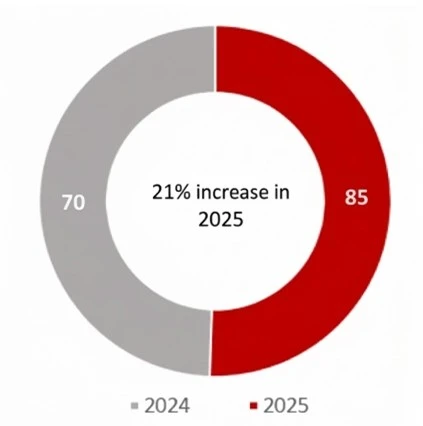
The number of events increased from 70 in 2024 to more than 85 in 2025, representing an increase of over 21% in activity. Concurrently, participant engagement grew, with the number of individuals benefiting from these initiatives rising from over 1,400 in 2024 to over 1,500 in 2025. This growth underscores the continued demand for and relevance of the College’s offerings.
By engaging over 1500 participants through its activities, the College effectively delivered a diverse range of structured training activities delivered by multiple faculties, centres, and institutes. Programmes in 2025 ranged from short-term practical workshops to internationally benchmarked qualifications, ensuring immediate job-relevant skills while driving long-term professional growth across diverse sectors in the Maldives.
The vocational and lifelong learning programme delivery extending across eight distinct units: the Institute for Research and Innovation, Chinese Language Centre, Centre for Foundation Studies, Faculty of Shariah and Law, Faculty of Educational Studies, Faculty of Health Sciences, School of Psychology and Counselling and Qasim Ibrahim School of Business. This broader organisational participation not only diversified the training themes but also underscored an institutional shift toward embedding lifelong learning as a strategic priority across faculties and centres.
AY 2025 featured a broader range of training programmes, spanning technical and research skills, leadership and professional development, language and communication, psychosocial support, health and safety, and digital education, alongside continued provision in hospitality and law.
Diverse and Relevant Training Topics:
The 2025 calendar featured an expanded, highly diverse thematic range encompassing technical competencies, psychosocial health, digital pedagogy, and enterprise leadership aligned with national development priorities and workplace readiness:
Technical, Analytics & Research Skills: Project Management, MS Excel (Intermediate to Advanced), Data Modelling and Visualisation, Partial Least Squares Structural Equation Modelling (SmartPLS), Action Research Methodologies, Math Aptitude Test Preparation, and Field-Based Legal Research.
Corporate Leadership, Governance & Workplace Competencies: Training of Trainers (TOT), Supervisory Skills, Effective Leadership and Work Ethics, Developing Leadership Skills, Empowering Women to Lead with Confidence, Customer Service Excellence, Business Writing Skills and Motivational Training.
Language and Communication Skills: Tourism Chinese, Dhivehi Speaking Language, Reporting and Documentation (in Dhivehi), Business Writing, and Effective Communication.
Mental Health, Clinical & Psychosocial Support: Mental Health, Addiction Supervision and Counselling, and Stress Management & Resilience.
Health, Occupational Safety & Emergency Care: Basic First Aid with AED and Lifesaving Skills for Educators.
Digital Transformation & Education 5.0: Hybrid Learning Strategies, Learning Analytics, Student-Centred Digital Course Design, and DIGITAsia Educational Innovation.
Accessibility and Delivery Formats:
Programmed Events: 95% of the sessions were programmed, running on set schedules with defined curricula.
Ad-hoc Events: A smaller number of ad-hoc offerings were developed in response to specific sectoral needs or external partnerships.
Inclusion and Reach: Events were conducted across multiple campuses and venues and were accessible to participants from a variety of backgrounds, including unemployed youth, school leavers, working professionals, and civil servants.
Corporate Training:
In 2025, the Institute for Research and Innovation (IRI) at Villa College continued to play a significant role in advancing vocational and professional skills development across the Maldives through a diverse portfolio of corporate and public training programmes. Demonstrating its commitment to lifelong learning, workforce empowerment, and institutional capacity development, IRI delivered over 27 training programmes, reaching more than 450 participants from the public and private sectors.
Designed to be practical, participatory, and workplace-relevant, these programmes ranged from one-day workshops to intensive multi-day modules. Participating organisations included major government institutions, state-owned enterprises, and corporate entities such as Bank of Maldives, Housing Development Corporation, Malé Water and Sewerage Company, Maldives Islamic Bank, Housing Development Finance Corporation, and the Auditor General’s Office.
The key programmes included Training of Trainers (TOT), Project Management, Advanced Excel, Supervisory and Leadership Skills, and Data Modelling and Visualisation. Additional courses covered customer service, communication, business writing, motivational training, research planning, and math aptitude test preparation, addressing diverse professional and organisational development needs.
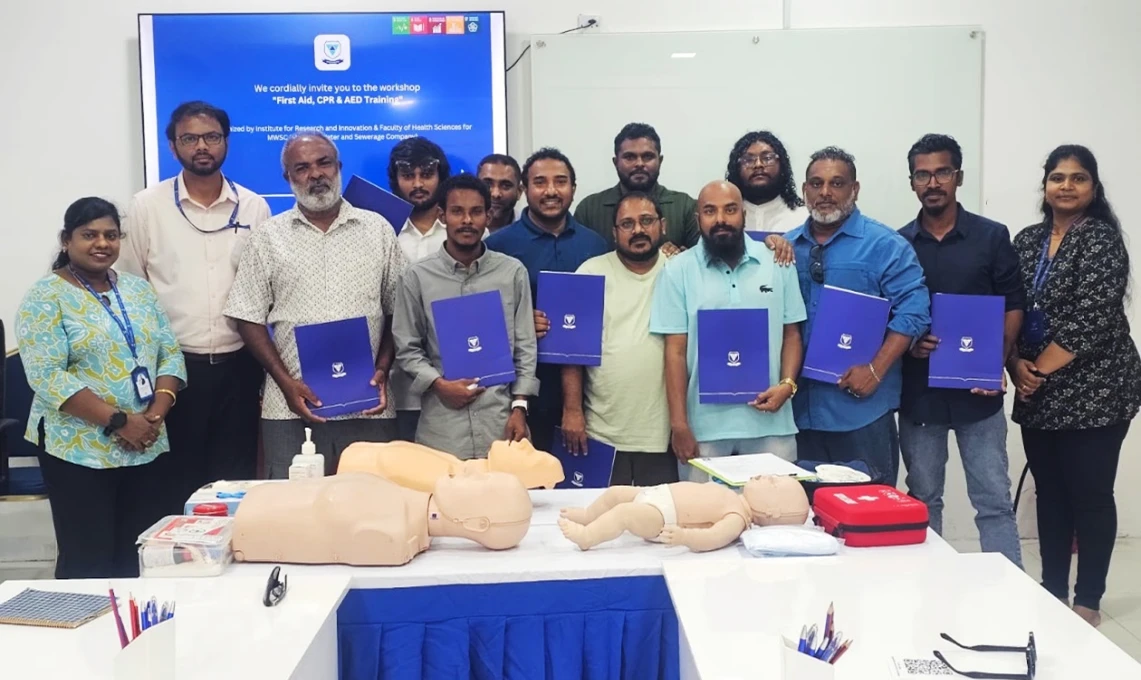
Two standout highlights of the year were the Basic First Aid with AED training delivered to Malé Water and Sewerage Company and the Dhivehi Speaking Language training conducted for Bank of Maldives, each training programme attracted 60 participants in total, recording the highest participation for an individual training programme during the year. The first aid training focused on essential emergency response skills, equipping participants with practical knowledge to respond to medical emergencies and potentially life-threatening situations in the workplace. The Dhivehi Speaking Language training, meanwhile, supported participants in strengthening their spoken Dhivehi skills for effective workplace communication.
Through these programmes, Villa College strengthened its contribution to vocational training and professional upskilling in the Maldives. By providing practical, workplace-relevant training to organisations and public participants, IRI expanded access to lifelong learning and supported workforce development, reinforcing the College’s commitment to SDG 4: Quality Education.
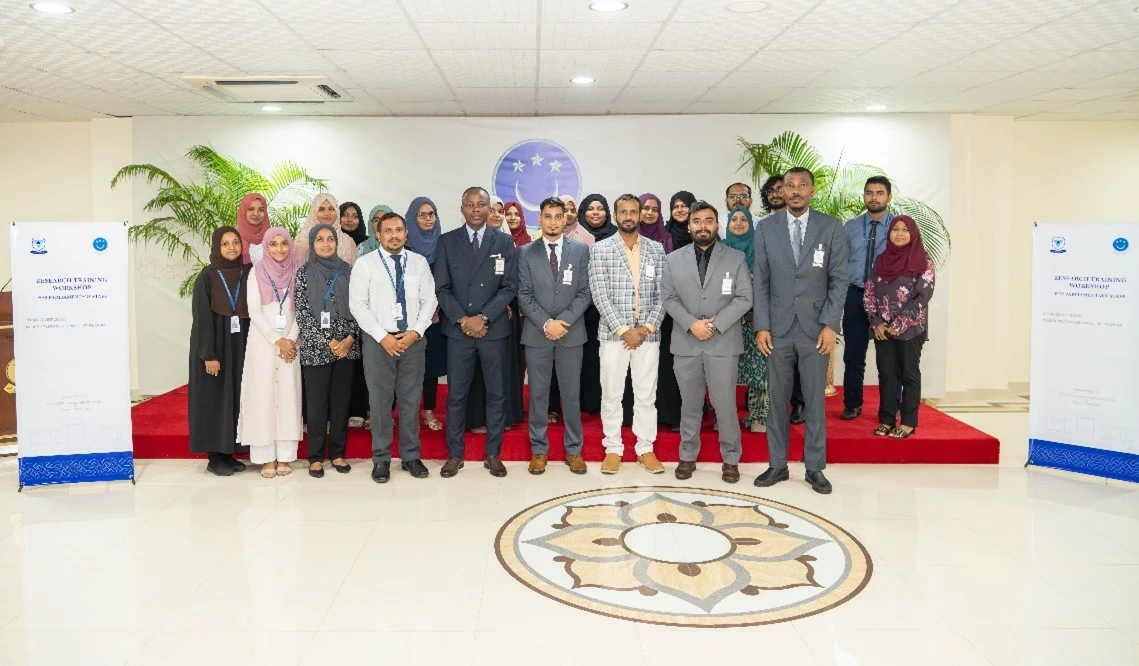
In another initiative, the Faculty of Shariah and Law conducted a full-day Research Training Workshop for 50 staff of the Parliament of Maldives and Committee Research Officers. The workshop covered research methodology, project structuring, and the practical application of empirical research in policy contexts. By strengthening research capacity and promoting the use of evidence in policymaking, the initiative demonstrated Villa College’s commitment to knowledge transfer, professional development, and lifelong learning, contributing to SDG 4: Quality Education.
Mental Health and Psychosocial Capacity Building:
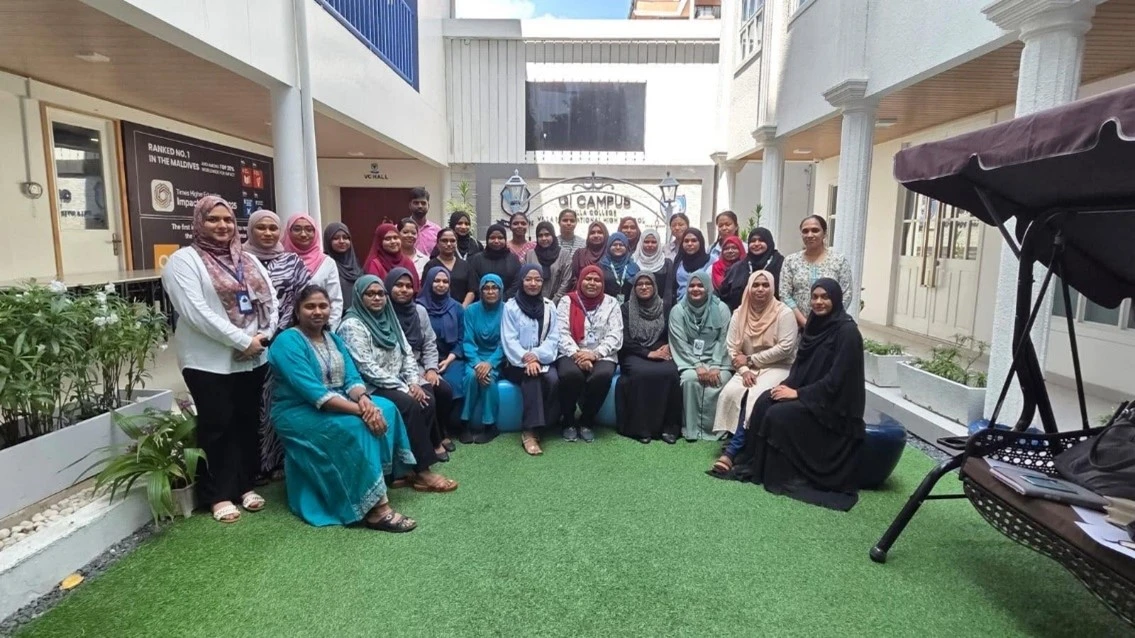
Led by the School of Psychology and Counselling and the VCare Counselling and Psychotherapy Centre, Villa College continued to offer vocational training in mental health and psychosocial support to the general public in 2025, providing opportunities to enhance knowledge and practical skills in counselling, rehabilitation, and mental health care. On 25 January 2025, Dr. Nanang E. Gunawan facilitated a workshop exploring Islamic and Western approaches to mental health and rehabilitation. This was followed by a workshop on 19 April 2025, led by Dr. Farhana binti Sabri, focusing on supervision and counselling in the context of addictions.
These workshops provide specialized knowledge and practical learning opportunities relevant to professional practice in mental health and counselling.
Chinese Language Training:
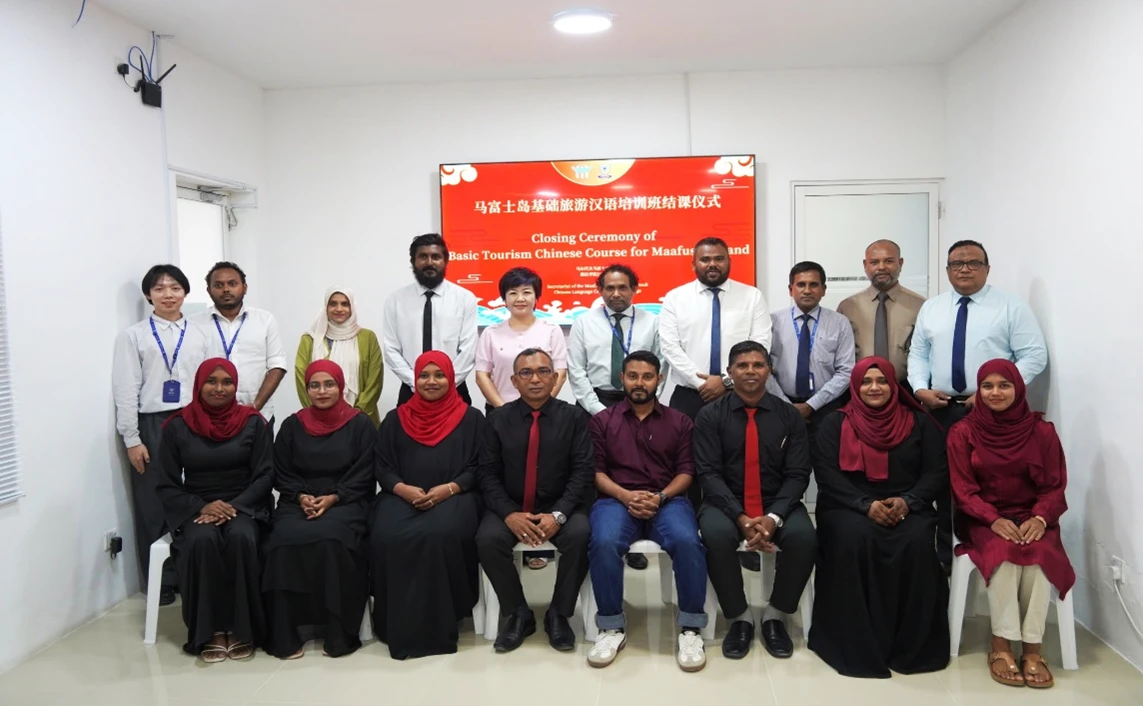
Language education also continued to expand in 2025. The Chinese Language Centre delivered the Basic Tourism Chinese Course on Maafushi Island, a two-month programme that brought together over 25 participants from local councils, companies, hospitals, and schools and concluded on 22 July 2025. The Centre also celebrated students’ outstanding results in Chinese proficiency examinations. Since officially launching exam sessions in January 2025, the Villa College Chinese Language Centre has successfully conducted two exam cycles, with over 50 students passing their respective proficiency tests to date, contributing to the development of Chinese-language skills among Maldivian students and professionals. Through practical, culturally immersive language education, the Centre expanded access to non-formal learning opportunities, enhanced professional prospects, and promoted intercultural understanding and international cooperation, contributing to SDG 4: Quality Education and SDG 17: Partnerships for the Goals.
Practical Health Education for National Capacity Building:
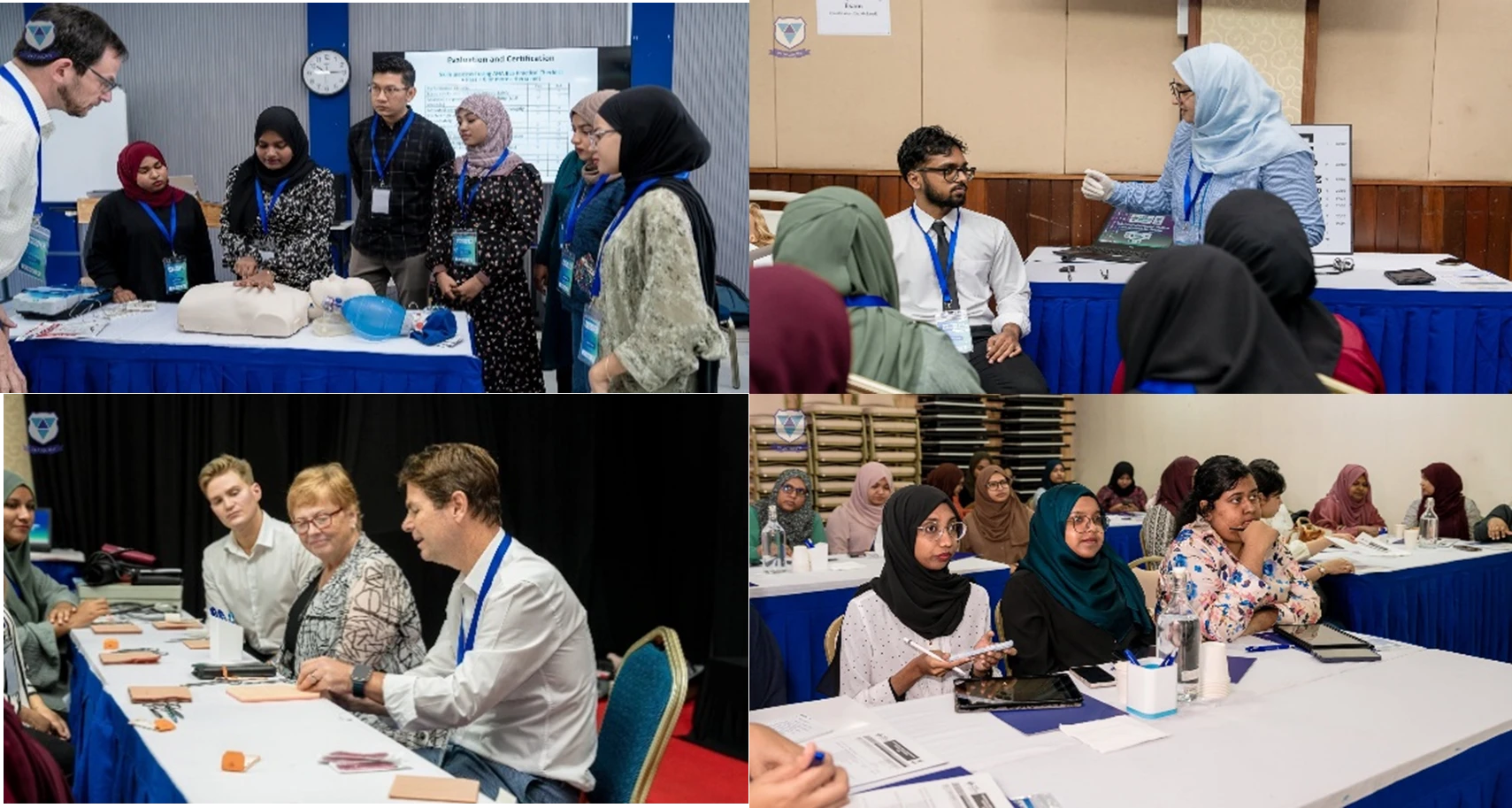
In 2025, the Faculty of Health Sciences (FHS) made a substantial contribution to the institution’s vocational training and lifelong learning portfolio, offering a diverse set of skill-building initiatives that combined theoretical learning with hands-on, real-world application. A key highlight was the delivery of over 15 vocational training workshops for more than 300 healthcare professionals, in collaboration with Indira Gandhi Memorial Hospital (IGMH) and Tree Top Hospital, as part of the pre-conference workshops for IMERC Maldives 2025. Bringing together local and international expertise, the workshops covered a diverse range of areas, including CPR, research from concept to publication, diving-related emergencies and their management, diagnostic skills and comprehensive assessments, point-of-care ultrasound, and immersion pulmonary oedema (IPE) and other common diving injuries. Through this combination of clinical knowledge and hands-on training, the workshops aimed to strengthen healthcare professionals’ competencies in patient assessment, emergency response, and the recognition and management of diving-related conditions, contributing to the continued development of the Maldivian healthcare workforce.
FHS further supported professional capacity development through a Preceptorship Training Programme on 30 December 2025 for 20 nurses from IGMH, Hulhumalé Hospital (HMH), ADK Hospital, and Vilimale’ Hospital. The programme focused on strengthening clinical teaching and supervision skills, covering feedback, assessment, documentation, learner progression, and the management of challenges in clinical settings.
Further supporting the development of the national healthcare workforce, the Tree Top Hospital–Villa College Nursing Scholarship Programme welcomed a new batch of students. Established in September 2021, the programme has awarded scholarships to a total of 23 students, including the latest batch, providing Maldivian students with opportunities to pursue nursing education and contribute to the country’s growing healthcare sector.
Beyond specialised healthcare training, FHS also extended its vocational and professional training initiatives to other sectors. On 24 July 2025, the Faculty delivered a full-day First Aid, CPR and AED Certification Training for 20 Addu City police officers, equipping participants with essential life-saving skills and practical emergency response competencies. This regional capacity-building effort was extended to Fuvahmulah City on 6 August 2025 through an intensive eight-hour safety training workshop for 19 police officers, strengthening emergency preparedness and first-response capabilities among law enforcement personnel.
Additionally, FHS conducted a specialised professional development session titled ‘Enhancing Communication and Transition into Practice’ for nursing professionals at AEH Hospital on 24 July 2025. The session focused on strengthening professional communication and supporting nurses in their transition into clinical practice, further reinforcing Villa College’s engagement with healthcare institutions in developing a competent and confident nursing workforce.
Collectively, these initiatives demonstrate FHS's continued commitment to advancing vocational education, strengthening professional competencies and expanding lifelong learning opportunities beyond traditional academic programmes. Through partnerships with healthcare institutions and public sector organisations, the Faculty extended specialised knowledge and practical skills training to diverse professional groups, contributing to a more skilled, capable and resilient Maldivian workforce.
Discover Hospitality Programme:
The Discover Hospitality Programme, a flagship vocational training initiative jointly delivered by Villa College and the Universal Foundation, continued to flourish in 2025 as a model for inclusive education and workforce development in the Maldives.
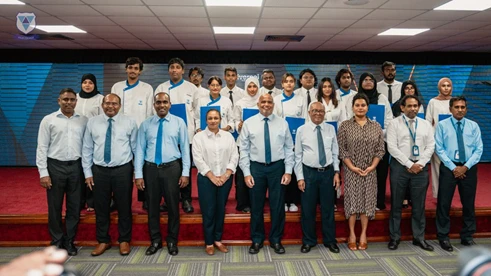
In 2025, the programme welcomed its seventh cohort and graduated its sixth, with a total of 214 participants benefited from this fully sponsored Certificate Level 3 training that combined classroom learning with practical placements at Universal Foundation’s resorts.
Firmly aligned with SDG 4: Quality Education and SDG 8: Decent Work and Economic Growth, the programme serves as a vital stepping stone for young Maldivians aspiring to join the country’s dynamic tourism and hospitality sector. This fully sponsored Certificate Level 3 programme targets unemployed youth aged 17 and above, offering a blend of theoretical instruction and hands-on industry exposure.
Participants engage in structured coursework on customer service excellence, event operations, guest relations, and sustainable tourism practices.
All training is mapped to National Competency Standards, ensuring graduates acquire both relevant knowledge and practical capabilities required by the industry. A defining feature of the programme is its immersive on-the-job training component, where learners undertake internships at various Universal Resorts. These placements enable participants to apply classroom learning in real-world hospitality environments, enhancing their industry readiness and employability. To reduce financial barriers, each participant receives a monthly stipend of MVR 3,000, reinforcing the programme’s commitment to equitable access.
In 2025, the programme marked several key milestones:
Welcomed the 7th batch of 20 new participants,
Celebrated the graduation of the 6th batch, comprising 17 individuals,
Reached a cumulative total of 152 alumni since inception,
Supported a total of 214 participants throughout the partnership, reflecting strong growth in both demand and institutional capacity.
Despite its expansion, the programme has consistently maintained a completion rate exceeding 80%, alongside an 85% post-graduation employment rate. Many graduates have secured employment in resort operations, guest services, and related fields, contributing to the development of a skilled local workforce in one of the Maldives’ key economic sectors. Through this initiative, Villa College reaffirms its commitment to lifelong learning, industry-integrated vocational education, and social mobility by equipping young people with the skills and opportunities to succeed in the tourism industry and beyond.
SAILS Upskilling Programme:
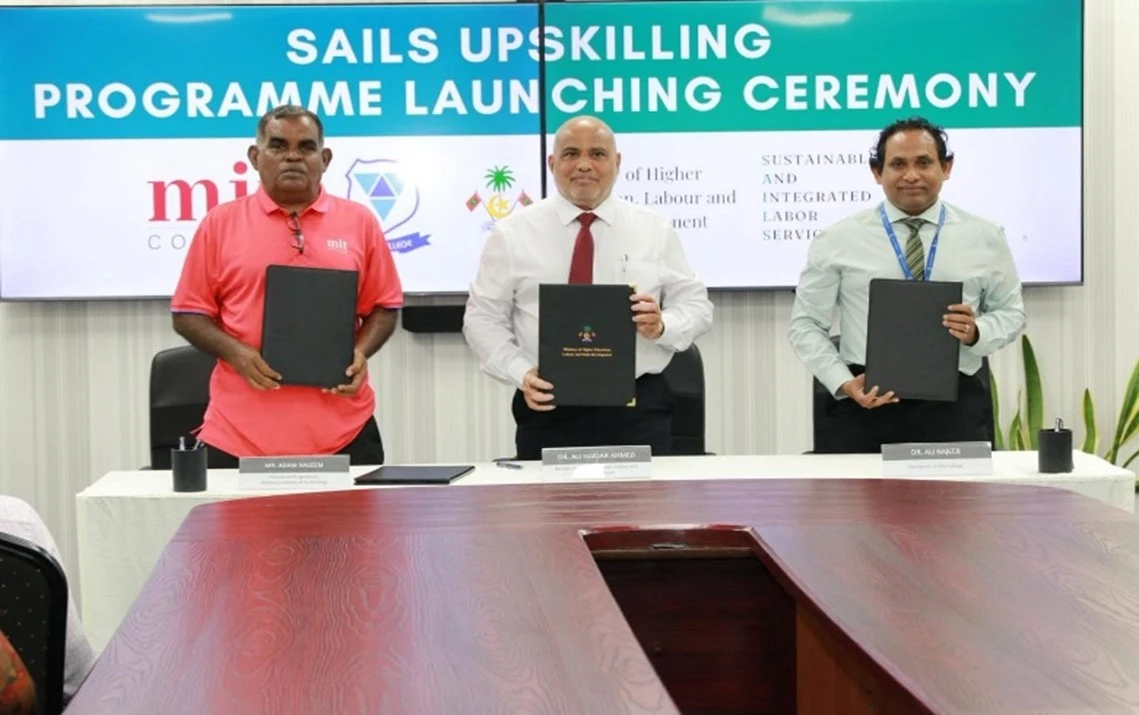
Villa College expanded access to vocational education in 2025 through certificate-level training opportunities introduced under the Sustainable and Integrated Labor Services (SAILS) project. Implemented in collaboration with the Ministry of Higher Education, Labor and Skills Development and financed by the World Bank, the initiative aims to strengthen workforce skills and improve employability by providing practical, industry-relevant training opportunities across the Maldives.
The project introduced a range of certificate-level courses tailored to the needs of key economic sectors, particularly tourism and marine services. These included Certificate 3 in Aquatic Recreation, National Certificate 3 in Guest House Operations, National Certificate 3 in Snorkeling, and National Certificate 3 in Marine Mechanics. A Basic Chinese Language course was also introduced to support communication skills among individuals working in the tourism industry. By offering training in different locations, including island communities, the initiative sought to broaden access to vocational education and equip participants with skills relevant to local employment opportunities.
In 2025, a total of 35 participants enrolled in the Basic Chinese Language course, National Certificate 3 in Guest House Operations, and National Certificate 3 in Marine Mechanics under the SAILS project training programmes. Of these, 9 participants successfully completed their training, while the remaining participants are still undertaking their programmes. The training provided practical competencies in areas such as guest house operations, aquatic recreation, snorkelling guidance, marine mechanics, and tourism-related communication. These certificate-level qualifications and training opportunities supported participants in developing job-ready skills and pursuing employment in sectors vital to the Maldivian economy.
Through its involvement in SAILS, Villa College reaffirmed its commitment to accessible vocational education, workforce development, and lifelong learning, contributing to SDG 4: Quality Education and SDG 8: Decent Work and Economic Growth.
Erasmus+ DIGITAsia project:
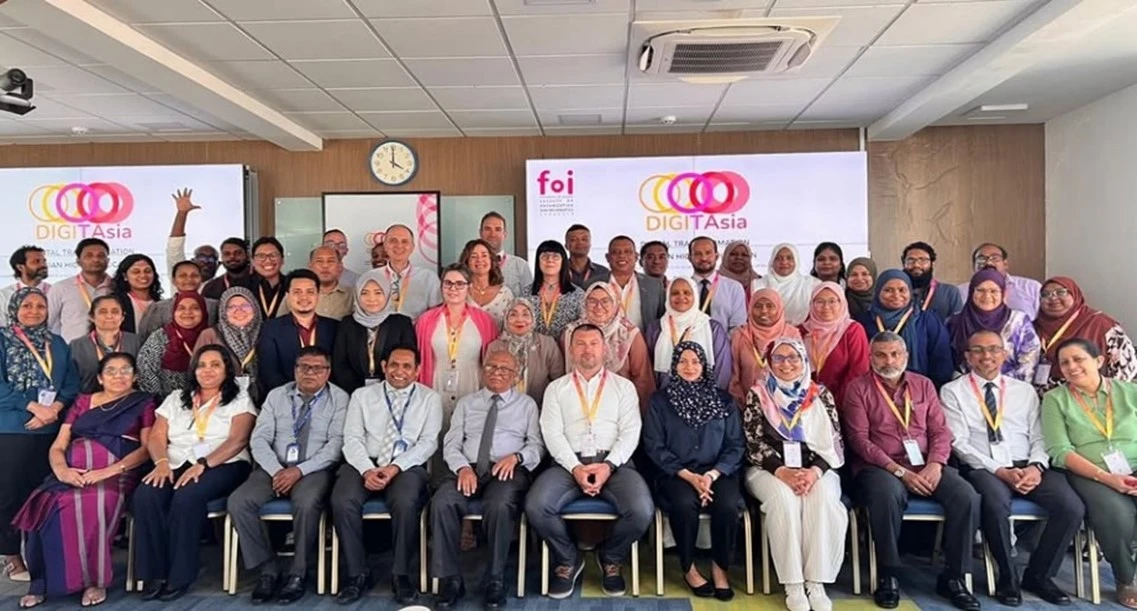
The Erasmus+ DIGITAsia project strengthened Villa College’s contribution to vocational training and lifelong learning in 2025 through the collaborative development of digital learning resources and professional capacity building. On 25 February 2025, Villa College, as one of the Maldivian partners of DIGITAsia, officially launched the project to advance digital education in higher education institutions.
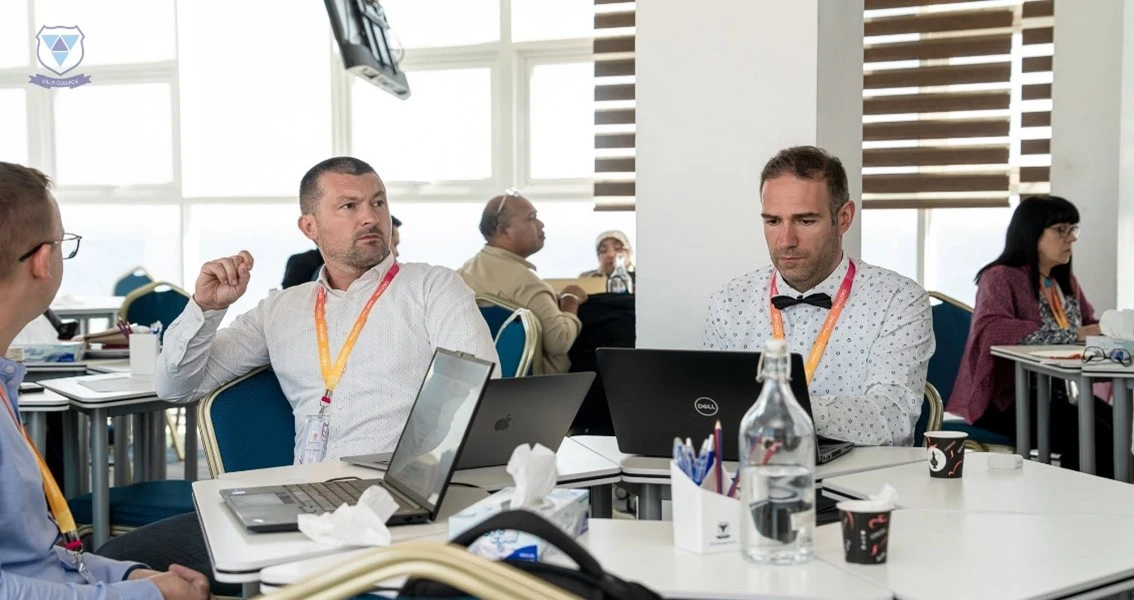
As an active project partner, Villa College collaborated with participating institutions to develop and redesign learning modules incorporating Education 5.0 and Universal Design for Learning (UDL) principles. A key milestone was the completion of the Training of Trainers (TOT) Programme, which brought together 54 participants from partner institutions in the Maldives, Sri Lanka, and Malaysia. The programme strengthened educators’ practical skills in digital education and inclusive teaching, enabling them to apply their learning in their respective institutions. It concluded on 29 October 2025 with a capstone showcase and strategic planning sessions, during which participants presented their redesigned learning modules and exchanged feedback. The sessions also supported planning for the wider delivery of training across participating institutions.
Building on these regional efforts, Villa College extended the initiative to its own academic staff through professional training for lecturers in 2025. The training equipped lecturers with practical competencies in digital technologies and inclusive teaching approaches, supporting them in redesigning their modules to create more accessible, engaging, and technology-enhanced learning experiences.
Through its collaboration in developing learning modules, strengthening lecturers’ digital competencies, and promoting the practical application of innovative teaching approaches, Villa College expanded opportunities for educators’ professional development and lifelong learning. The initiative contributed to SDG 4: Quality Education by strengthening educators’ capacity to deliver inclusive, accessible, and technology-enhanced learning experiences.
In 2025, Villa College continued to expand access to vocational education and lifelong learning, delivering over 85 activities that benefited more than 1,500 participants across the Maldives. Compared to 2024, the 2025 training portfolio demonstrated greater breadth in subject areas, stronger institutional participation and expanded opportunities for professional and skills development. Through diverse training programmes and strategic partnerships, including SAILS, Erasmus+ DIGITAsia and Discover Hospitality, the College strengthened professional competencies, supported workforce development and created pathways for further learning and employment. These efforts reaffirmed Villa College’s commitment to inclusive lifelong learning and its contribution to SDG 4: Quality Education, SDG 8: Decent Work and Economic Growth, and SDG 17: Partnerships for the Goals.