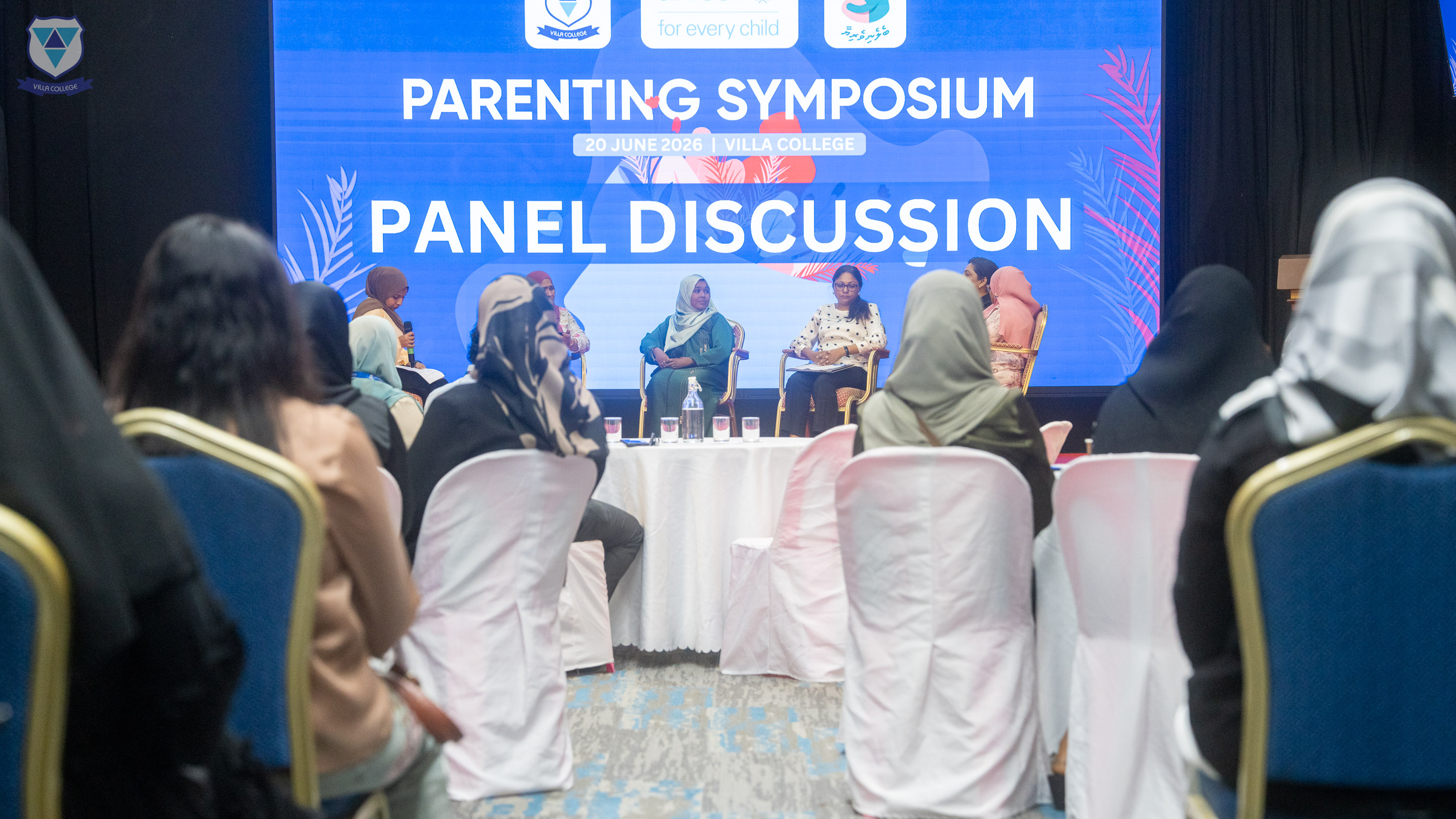
A student-led symposium has brought together parents, educators and specialists to call for integrated health, education and social-service systems to support families through a child's earliest years.
Villa College, in collaboration with UNICEF, hosted the Parenting Symposium 2026 at the Villa College Main Hall on Saturday, 20 June, bringing together parents, educators and public-sector professionals to examine how the country's health, education and social-service systems can better support families during the most formative period of a child's life. Convened under the theme 'Early Years Matter: Supporting Parents Through Integrated Systems', the event was organised by students of the College's Master of Clinical Psychology and Master of Counselling programmes, working alongside their lecturers and UNICEF.
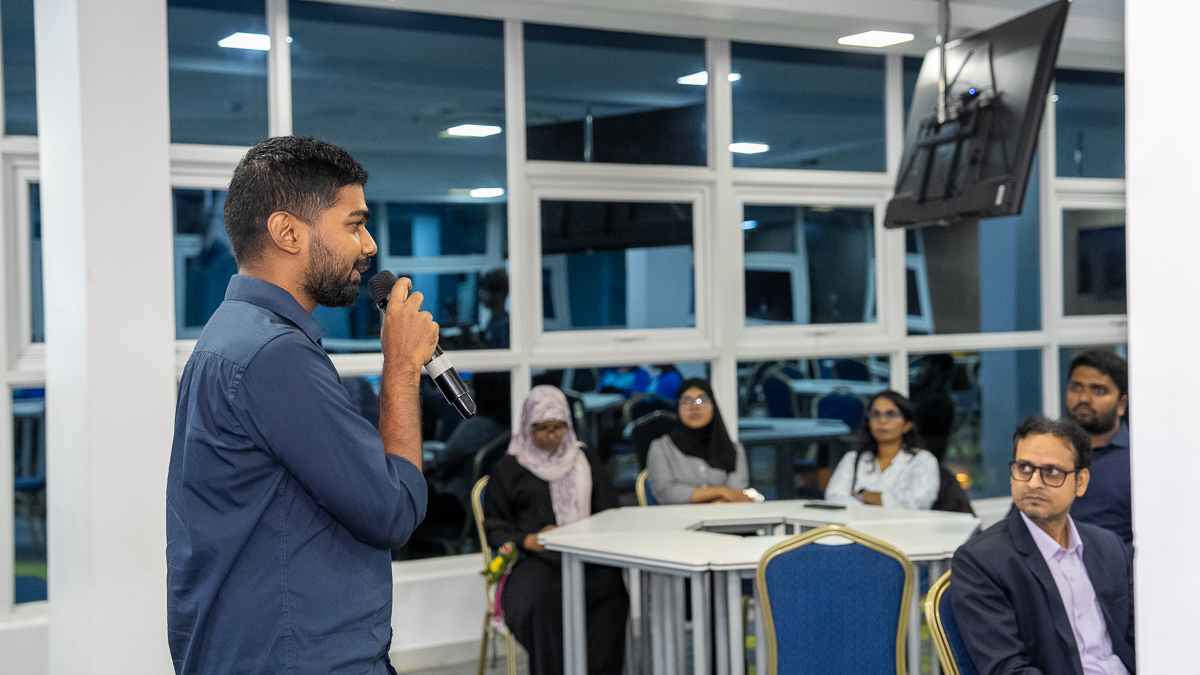
The symposium opened with opening remarks of Dr Edward Addai, UNICEF Representative to the Maldives. Dr Addai underscored the importance of the early years in shaping a child's lifelong health, learning and wellbeing, and stressed that support for children must begin with support for their parents. 'Supporting children starts with supporting parents,' he said. 'When health, education, and social services work together from the earliest years, families receive the support they need, children thrive, and societies become stronger.'
Delivering the introductory remarks, the Vice Rector of Villa College, Associate Professor Dr Ali Najeeb, said that education 'doesn't stop at the walls of our classrooms' and must extend directly into society. He commended the Master of Clinical Psychology and Master of Counselling students who organised the symposium, noting that they were not merely studying theory but building practical solutions for Maldivian families. Reminding the audience that, to care for a child, society must first care for the caregiver, Dr Najeeb assured the parents and caregivers present that they did not have to carry that responsibility alone.
A central feature of the programme was a panel discussion moderated by Villa College student Aishath Shaiba Kinanath. The panel brought together Azra Moosa, a parent of a child with special needs and a Villa College student; Zaheena Mufeed, Special Education Teacher at Aminiya School; Fathimath Azza, Director General at the Ministry of Education and Chair of the Joint Parenting Programme Steering Committee; Fathimath Shahru, Senior Psychologist at Hulhumalé Hospital; and Aminath Shahula, Health and Nutrition Specialist at UNICEF Maldives.
Discussion centred on the case for moving away from institutions that operate in isolation and towards a unified system in which health, education and social services work as one team around the family. The panellists examined the administrative and systemic barriers that families encounter when a developmental concern first arises, along with the emotional toll those barriers can take on parents. They also highlighted the importance of identifying developmental difficulties early and of distinguishing between inherent clinical conditions and delays linked to environmental factors such as excessive screen time and limited social interaction. National initiatives such as the Belenveriya programme were cited as examples of the coordinated, cross-sectoral approach the symposium advocated. The session concluded with a question-and-answer exchange between the panel and the audience, after which the Rector of Villa College, Dr Ahmed Anwar, presented certificates of participation to the panellists.
The afternoon was given over to research paper presentations by Villa College students, whose studies addressed issues of direct relevance to Maldivian families. Mariyam Thooba presented on the lived experience of older siblings of an autistic younger sibling, while Hawwa Zimna examined the relationship between parenting styles and childhood trauma among young adults in the Greater Malé region. Fathmath Shazleena explored the experiences of non-working mothers in the 'sandwich generation', and Aminath Nisfa presented work on the translation and adaptation of the Lee Scale for the Maldivian caregiver population. Hawwa Sulaiman shared a qualitative study on quality time as experienced by stay-at-home and working mothers, and Aishath Sufana examined perceived stigma in help-seeking behaviour among single parents. The presentations were followed by a question-and-answer session.
The symposium also offered a series of practical workshops, delivered simultaneously by the College's Psychology Master's students, which participants could join through prior registration or as walk-ins. The sessions covered caregiver self-care and coping strategies, early childhood development and positive parenting, supporting children's emotional regulation, and the early recognition of developmental needs. A dedicated play corner, staffed by students from the Psychology Association, provided games and activities for children attending with their families.
The Parenting Symposium 2026 marked a significant step towards building a more comprehensive and connected support system for parents raising young children in the Maldives. Villa College reaffirmed its commitment to facilitating academic and professional conversations of this kind, and to fostering a community in which rigorous research informs practical, systemic change for children and the caregivers who support them.