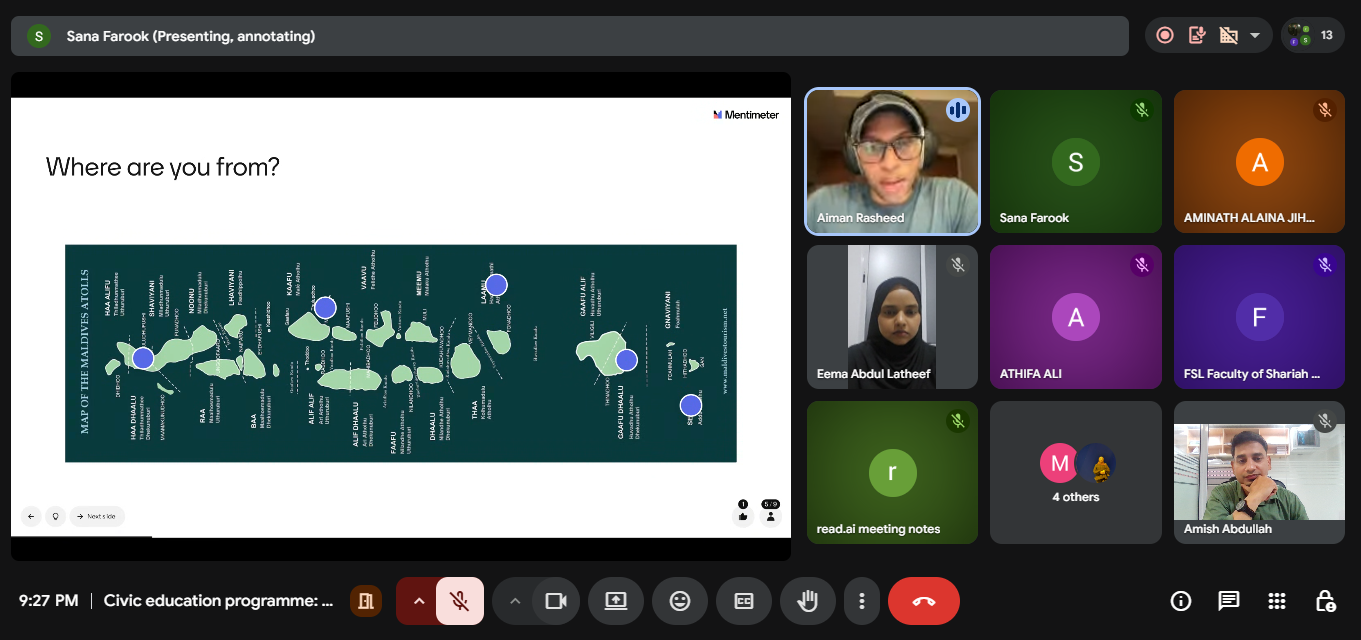
Villa College recently advanced its commitment to accessible higher education by conducting Wave II of its Civic Education and Political Participation session. Hosted by the Faculty of Shariah and Law on 18 March 2026, the initiative marked a strategic transition from its initial physical launch at the QI Campus to a fully online format. This digital shift was specifically designed to engage students residing in the distant atolls. By leveraging virtual platforms, the institution ensured that geographical distance no longer serves as a barrier to high-level legal and civic literacy within the Maldivian archipelago.
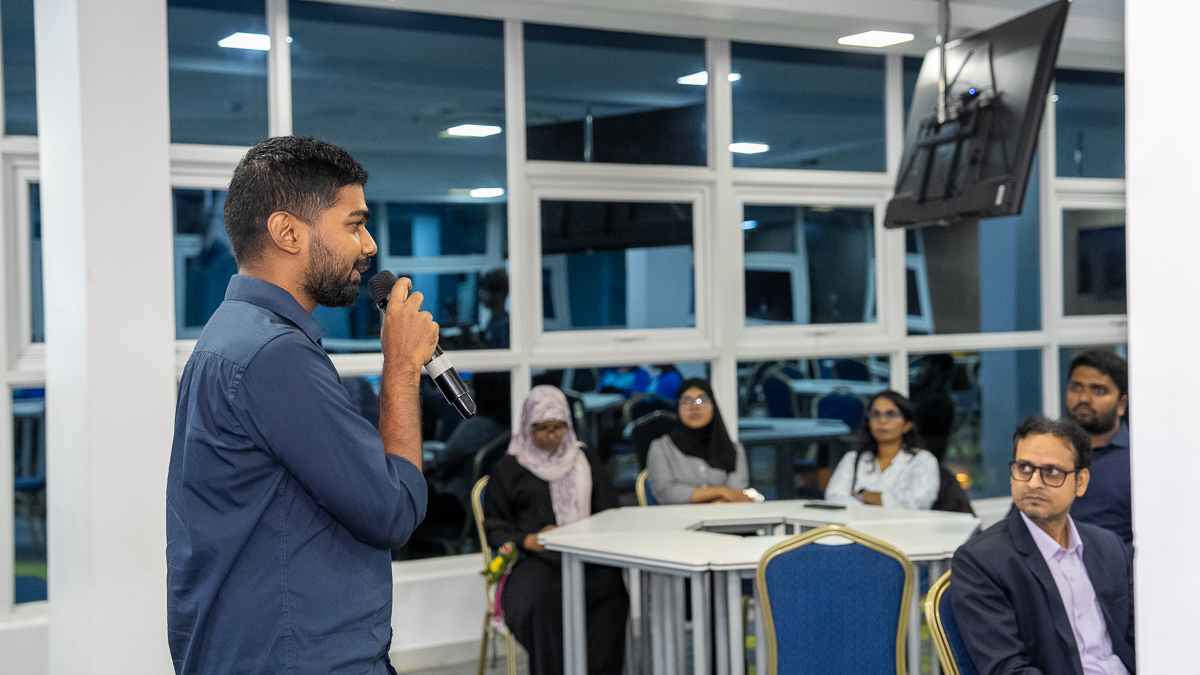
The structural realities of island administration often present a stark contrast between capital-centric policymaking and atoll-based implementation. To address this divide, the virtual workshop brought the complexities of the Maldivian decentralised system directly to students across the nation. The collaboration featured frontline insights from the Maldives Local Councils Association, with facilitation by Aiman Rasheedh and Sana Farooq. Amish Abdullah, a Senior Lecturer at Villa College, moderated the dialogue to carefully connect practitioner insights with the academic inquiries of the students. This format moved the learning experience beyond the traditional classroom and onto the digital frontline.
A central focus of the session was examining the Decentralisation Act as a lived reality rather than a purely theoretical text. In many traditional educational models, legal frameworks are studied in isolation from their community impact. Conversely, this digital forum allowed students based in the atolls to explore how local administrative decisions directly affect their own communities. The dialogue explored mechanisms for making local governance more transparent and responsive. This approach demonstrated that the strength of democratic institutions relies heavily on the active engagement of citizens across all islands.
The educational model also situated these local administrative challenges within a broader multilateral framework. Supported by international partners including the United Nations Development Programme and Australian Aid, the curriculum connected atoll-based discussions to global objectives. Specifically, the session aligned with Sustainable Development Goal sixteen, focusing on peace, justice, and strong institutions, alongside Sustainable Development Goal eleven, which promotes sustainable cities and communities. For students of Law and Shariah, this exposure provided a necessary intersection of local policy and international practice, offering a depth of understanding that conventional academic modules often lack.
The event ultimately underscored the responsibility of the next generation of legal professionals to foster informed and accountable public administration. Concluding the session, Eema Abdul Latheef, Vice President of the Villa College Law Society, delivered a formal vote of thanks acknowledging the facilitators, the moderator, and the international partners. Her closing remarks reinforced the value of inclusive educational platforms in empowering atoll-based students. The insights gained through this multilateral dialogue are positioned to support these students as they transition from academic study into active leadership roles within the legal and political landscape of the Maldives.