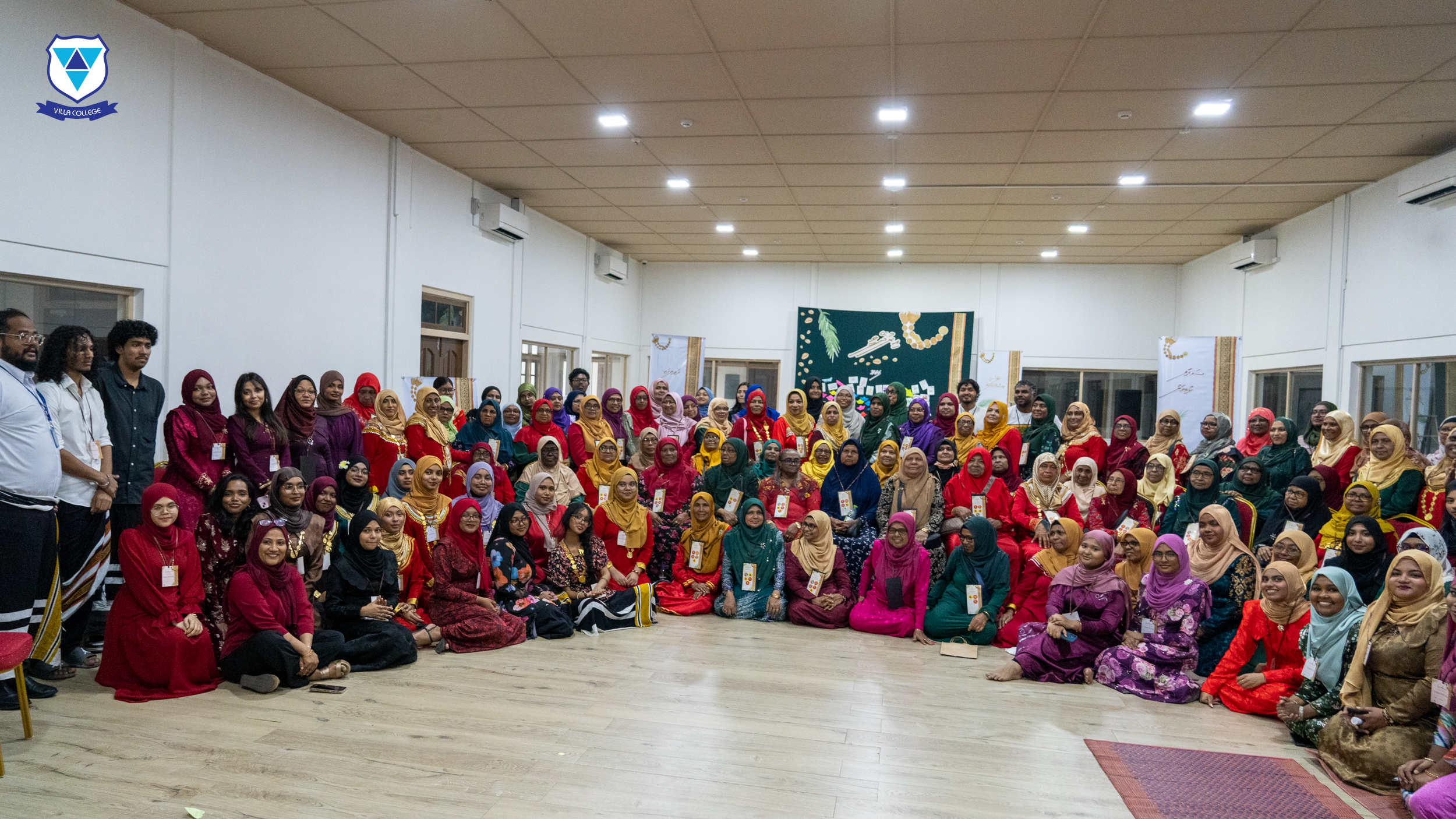
On 22 April 2026, psychology students at Villa College hosted Irudheyvy, a community event that brought together more than a hundred older adults at Isravvehinge Naadhee. Organised as a voluntary contribution to the wider community, the gathering featured a structured afternoon of traditional games, creative activities, and conversation. Its central purpose was to create a platform on which the younger and older generations could meet one another on equal terms, share familiar pastimes, and spend unhurried time in each other's company.
A defining feature of the initiative was the spirit of volunteerism that shaped it. The students who organised Irudheyvy gave their time, energy and creativity to build something meaningful for people outside their immediate academic circle. This distinction matters. Volunteerism, when practised early and consistently, cultivates habits of civic responsibility that remain with graduates long after they leave the lecture theatre. By choosing to devote an afternoon to service, the psychology cohort offered a clear example of how student-driven initiative can contribute directly to community wellbeing.
Equally central to the afternoon was its focus on intergenerational engagement. In a society where the daily rhythms of younger and older adults increasingly diverge, spaces designed to bring the two together are both rare and valuable. Irudheyvy offered elders the company of attentive young listeners, and offered students the irreplaceable insight that comes from sitting beside someone whose life has already unfolded across many decades. The value, for both sides, lay in the simple act of presence and the conversations it made possible.
The student organisers made a deliberate decision to ground the afternoon's activities in Maldivian heritage rather than utilising generic engagement exercises. They set up stations for familiar traditional pursuits, some of which included fas oh, ovvalhu gondi, roanu veshun, and fangi vinun, alongside storytelling in a dedicated athirimathi corner. These familiar cultural forms naturally reduced hesitation, encouraged easier participation, and allowed older adults to step into a role of quiet authority, often becoming the teachers of the afternoon. The choice to honour heritage, rather than set it aside, was itself a gesture of respect.
The programme was also carefully designed with elders in mind, ensuring that every activity served as an opening for connection. Memory walls, an island map exercise, and flip the cards invited shared recollection and gentle conversation about places and people long remembered. Motor coordination activities such as shoot your shot, bilateral colour match, and fruit swap kept the atmosphere lively without ever becoming demanding. Pointillism, origami, and photo frame designing offered creative outlets that students and elders could work on side by side, while storytelling sessions drew out the voices and histories of those who had the most to share.
Beyond its immediate value to the community, Irudheyvy also became a profound learning experience for the students involved. They came away with insights that no textbook can fully convey, gained through observation, conversation, and shared laughter with the elders they had set out to serve. For industry professionals observing how educational institutions prepare graduates for the workforce, the event serves as a practical model. By integrating voluntary service, cultural awareness, and genuine human connection, Villa College is actively shaping graduates who are not only academically capable, but also attentive and responsive to the communities they will one day serve.