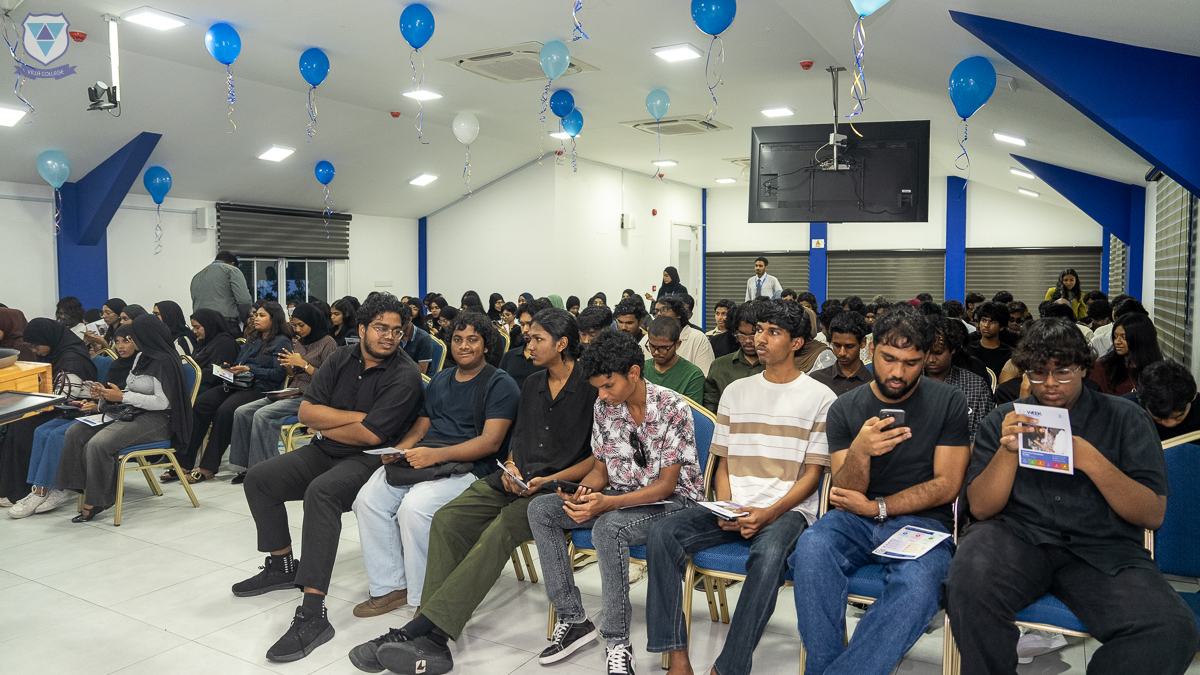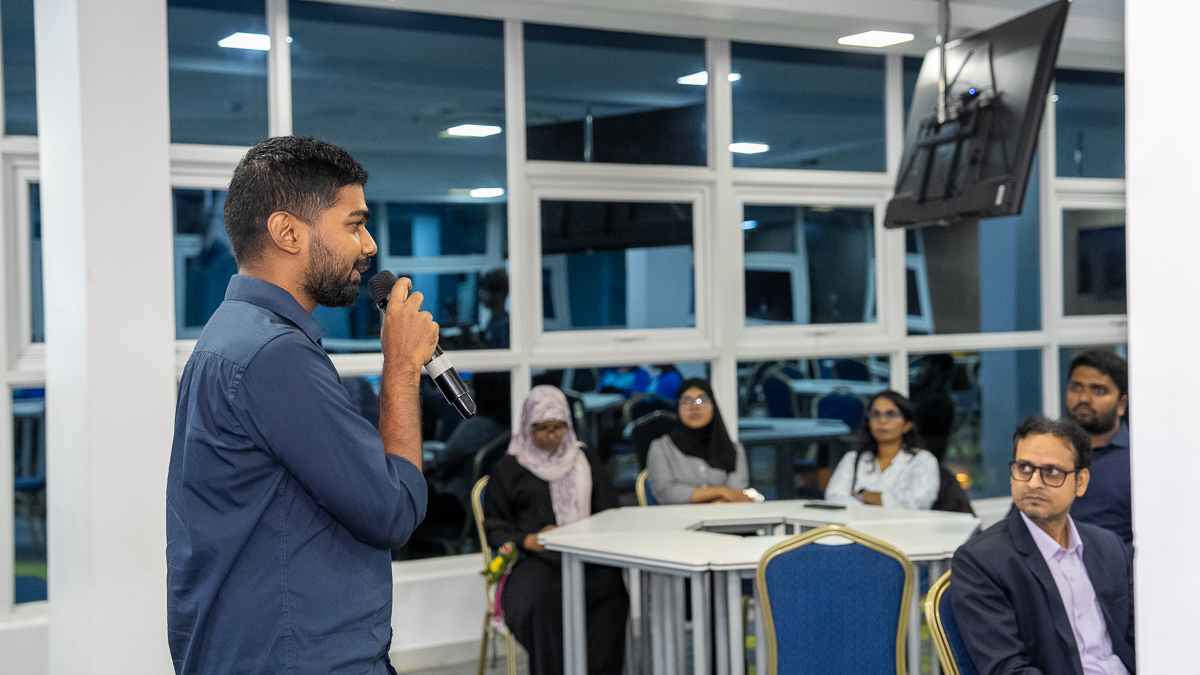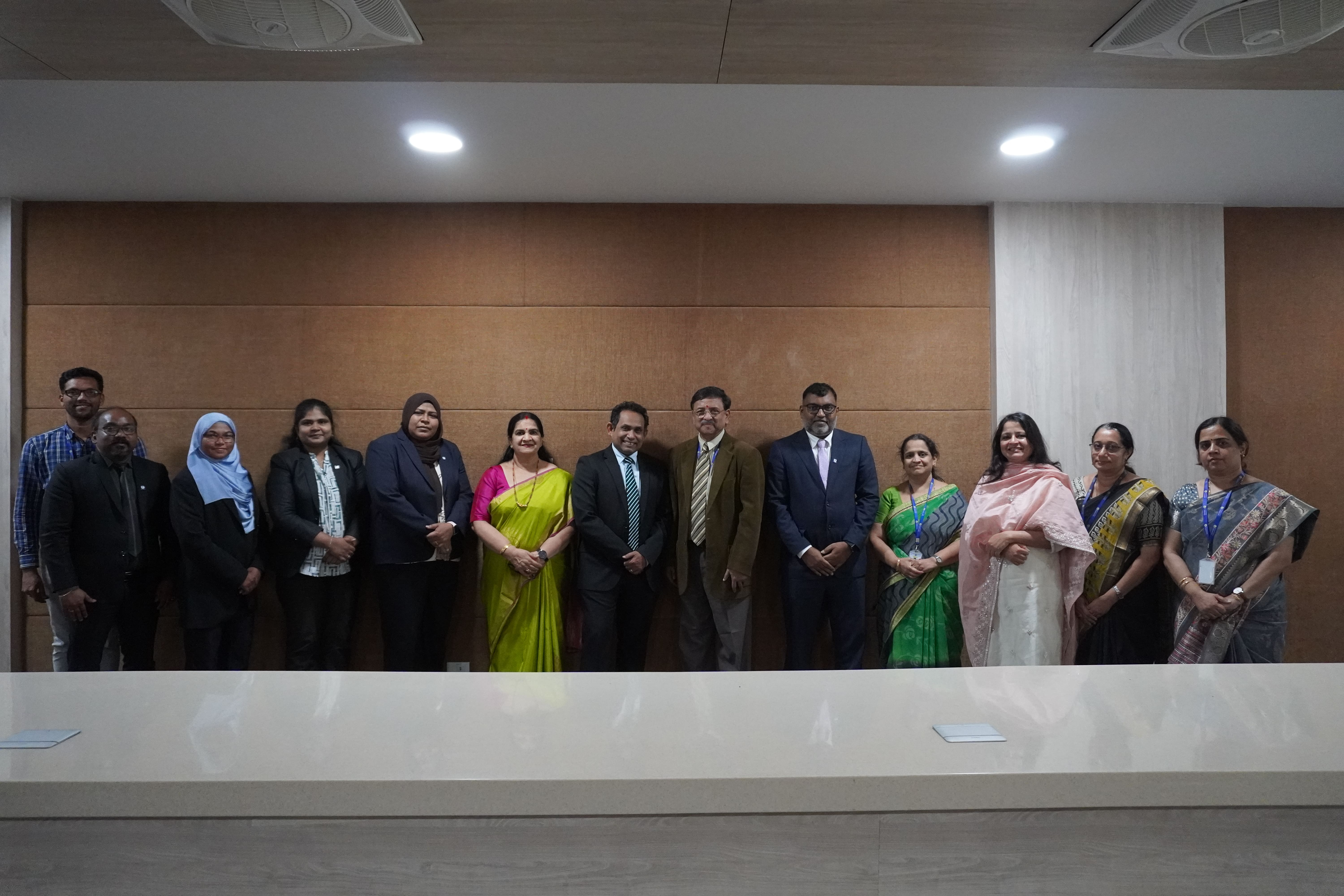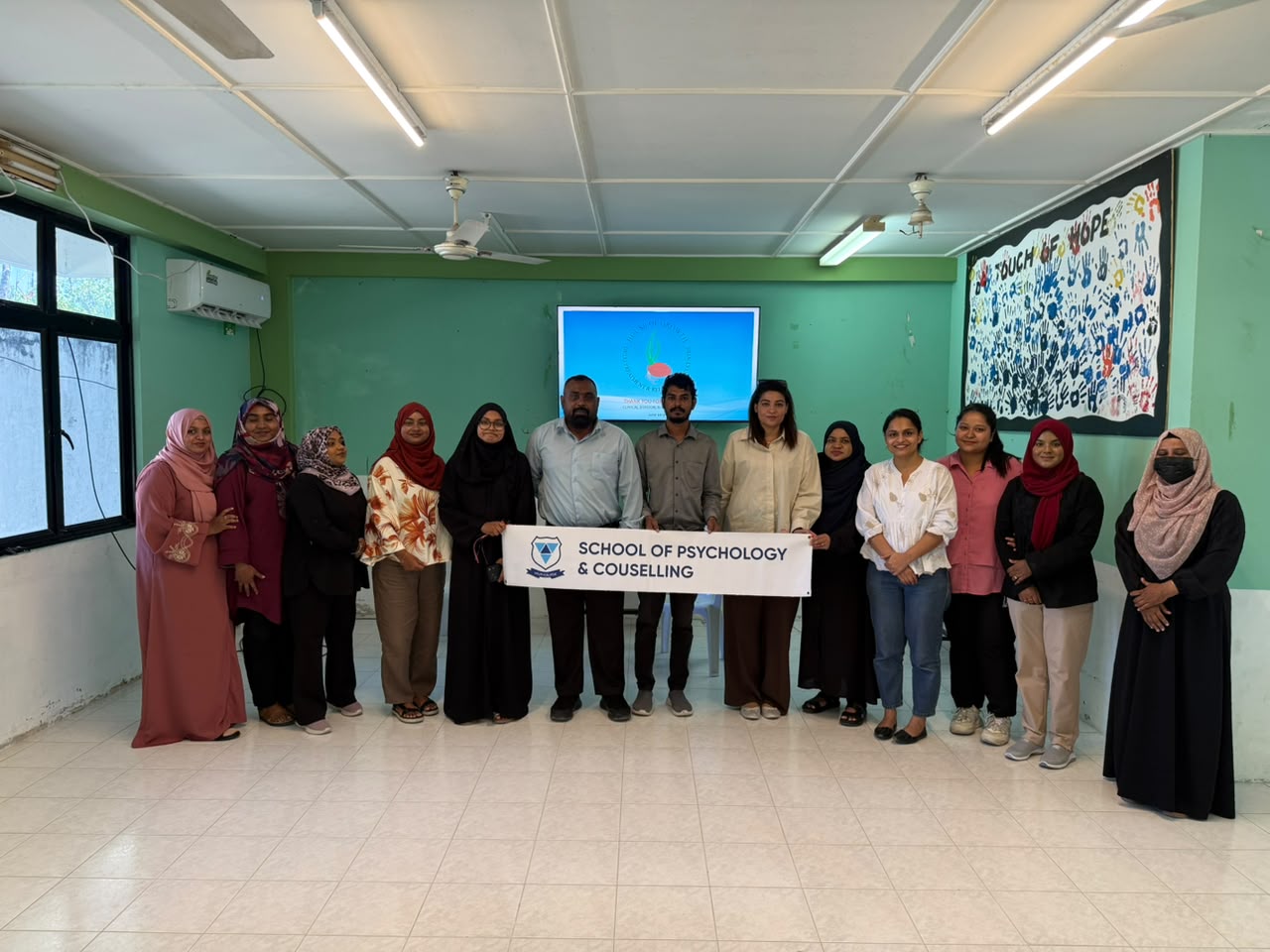
On 4 July 2026, students from Villa College's Master of Science in Counselling programme travelled to the island of Himmafushi. Their destination was the National Drug Agency's Drug Treatment and Rehabilitation Centre, a residential facility currently supporting around eighty male clients and four female clients. The visit was organised by the January 2025 batch as part of the Addictions Counselling course, with students from both the January 2025 and May 2025 batches taking part. The day included an orientation session, a full tour of the facility, two group counselling sessions led by the students, and a closing debrief. Across these four parts of the day, a few things stand out: how the course uses direct exposure to a working facility alongside classroom teaching, how the centre's phased treatment model works in practice, how group facilitation was adapted to two different client groups, and how the centre's daily operations bring together medical, social and spiritual support.
The visit was built around active participation rather than observation alone. The course's stated objectives, understanding the structure of a rehabilitation centre, gaining insight into treatment and recovery, observing counselling practice, interacting with professionals in the field, and developing practical facilitation skills, could have been met with a guided tour. Instead, students designed and delivered two group sessions themselves, working directly with the centre's residents under the guidance of the course instructor, Sidra Akhtar, and course coordinator, Kesia Elizabeth Jain. A closing debriefing session gave students the chance to reflect on what they had observed and practised during the day. Students from both cohorts took part together, giving the visit a shared practicum experience across two intakes.
The centre's assistant psychologist, who led the orientation session, explained the seven phases residents move through during treatment: a Detoxification Phase lasting seven days, an Intake Period of fourteen to twenty-one days, the New Member, Crew and Ramrod phases, each spanning three to four weeks, the Head of Department and Coordinator phases, each spanning two to three weeks, and a final Pre-Reentry Phase that prepares clients for life outside the centre. The names given to the later phases, Crew, Head of Department, Coordinator, point to a model in which residents take on increasing responsibility as they progress, rather than remaining passive recipients of treatment throughout. This progression also helps explain why residents were able to take part meaningfully in the group sessions the visiting students went on to lead, since many had already spent time in structured group settings as part of their own treatment.
The two group sessions the students facilitated were shaped differently for the two groups they served. One group of students led a session titled Moving Forward: Strengthening Recovery for Life Beyond Treatment for around twelve male clients, built around an emotional check-in, a recovery journey mapping activity, a relapse prevention discussion covering triggers, warning signs and coping strategies, and a closing exercise in which clients wrote a letter to their future selves. The other students worked with the centre's female clients on a session titled Rediscovering Strength: Empowering Women in Recovery, opening with a one-word emotional check-in, followed by a Strength Flower activity to help clients identify personal strengths, a group discussion on resilience and coping, and a closing affirmation circle. The female session included all four of the centre's female clients, while the male session involved around twelve of its roughly eighty male clients. Rather than running the same format twice at a different scale, the students designed two separate session plans suited to each group.
The facility tour also took students beyond the counselling rooms. Alongside residential wards and administrative and counselling offices, the centre includes a kitchen and dining area with specific dietary provisions for clients in detoxification, recreational and activity spaces, and a mosque. The daily routine described to students, morning meetings, therapy sessions, chores and recreational time, reflects an approach to recovery that draws on more than counselling sessions alone. Diet, daily structure and space for religious practice appear to form part of the treatment model itself, alongside the work done in individual and group counselling. This point was reinforced later in the day, when students met separately with the centre's own counsellors to discuss professional practice.
The visit connects to Sustainable Development Goal 3, Good Health and Well-being, through its focus on raising awareness of substance use disorders, its exposure to accessible rehabilitation services, and its role in preparing counsellors able to contribute to healthier communities. Students also marked the International Day Against Drug Abuse and Illicit Trafficking, observed annually on 26 June, with the centre's clients and staff over cake, and presented small tokens of appreciation, including tea sets and keychains, to the team that hosted them. For Villa College's Master of Science in Counselling programme, the day gave students the chance to test classroom learning against a working treatment environment, and to reflect, alongside the centre's own staff, on what recovery-oriented counselling looks like in practice.