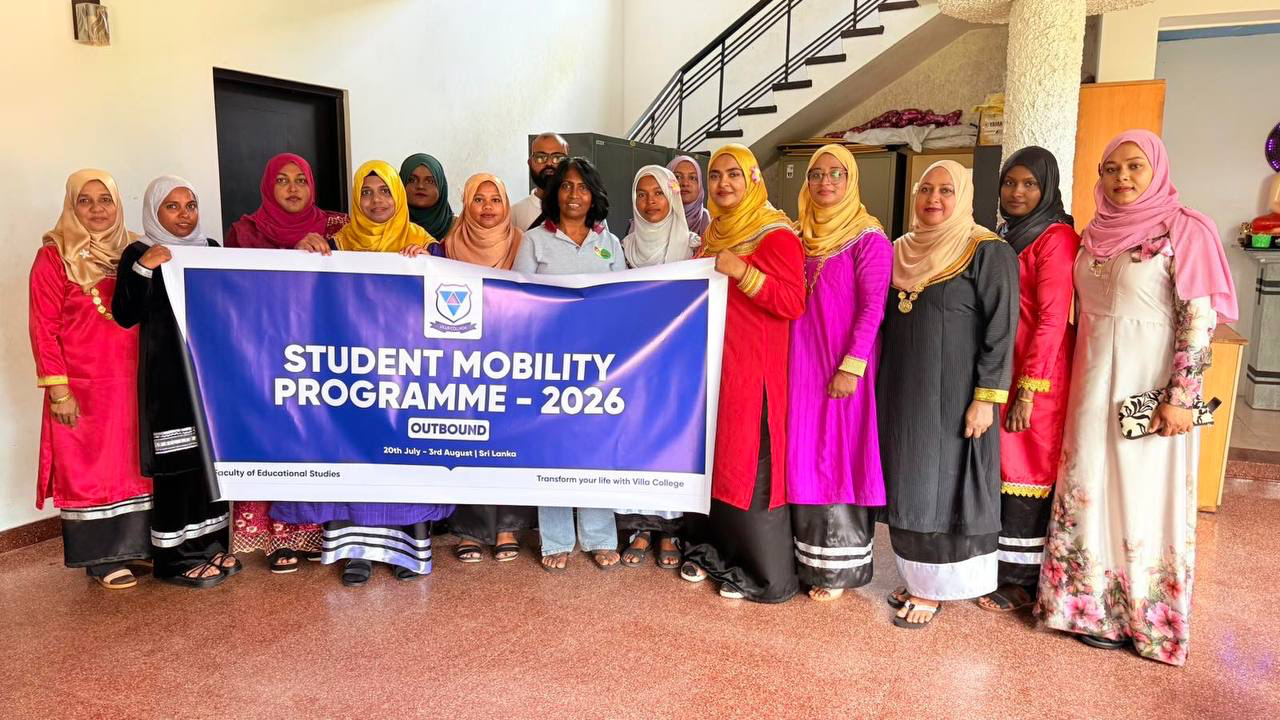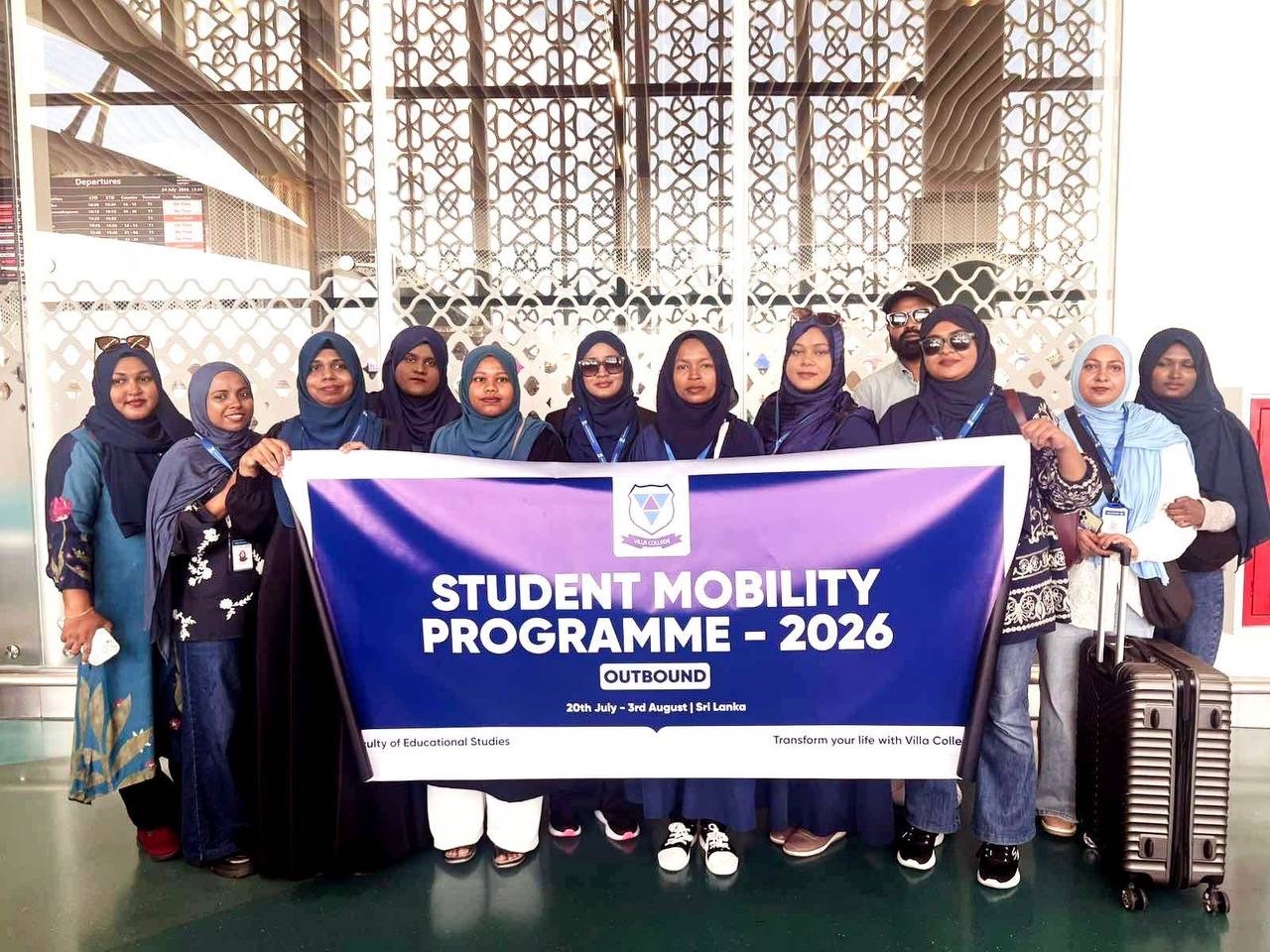
The Faculty of Educational Studies at Villa College recently organised its second outbound student mobility programme of 2026, giving future teachers practical exposure to foreign education systems. On 24 July 2026, a group of 12 students enrolled in the Diploma in Teaching Primary and Special Educational Needs, accompanied by two lecturers, travelled to Sri Lanka. The programme aims to take learning beyond classroom lectures by immersing students in real-world educational environments. By observing different teaching methods, classroom management techniques, and institutional frameworks, students gain insights that help them connect their academic coursework with practical application.
A primary focus of the trip was strengthening knowledge in inclusive and special education. The learning journey began on 25 July in Colombo, where participants attended a professional development session at BIBM. Facilitated by Ms. Rajeeka Jenorge, a psychologist and remedial therapist, the training provided practical techniques and evidence-based approaches for supporting students with diverse learning needs. This hands-on session allowed students to see how theoretical concepts in remedial teaching translate into effective classroom strategies, highlighting the importance of adapting instruction to support every learner.
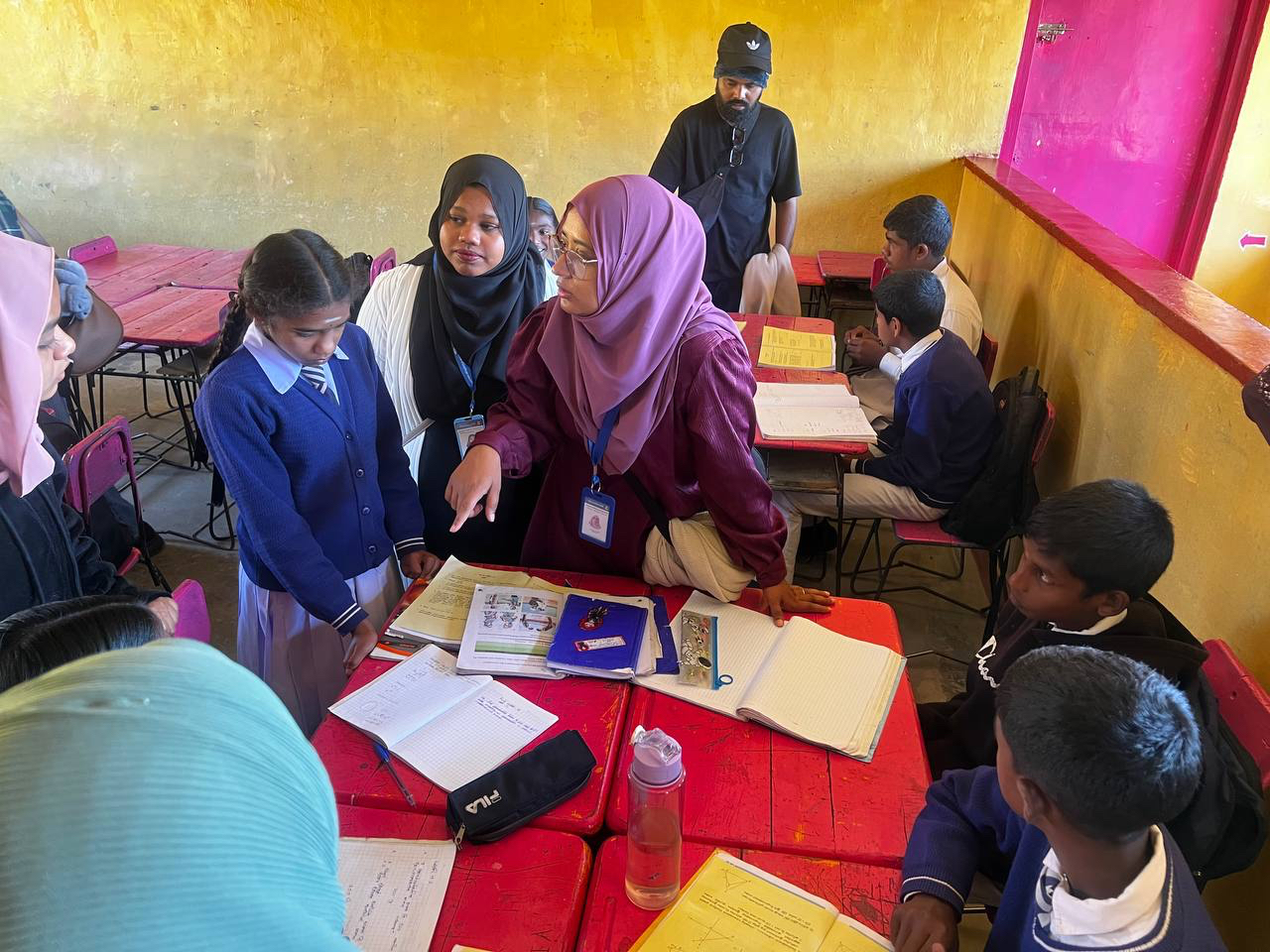
The group also explored how education functions in different socio-economic settings by visiting Methodist College, a rural school in Nuwara Eliya. During the visit, students observed how teachers successfully deliver quality education despite facing resource constraints and daily challenges. This experience offered a meaningful contrast to well-resourced environments, demonstrating the dedication and adaptability required of effective educators. It encouraged students to reflect on how resourcefulness and creative problem-solving can overcome operational hurdles in any school setting.
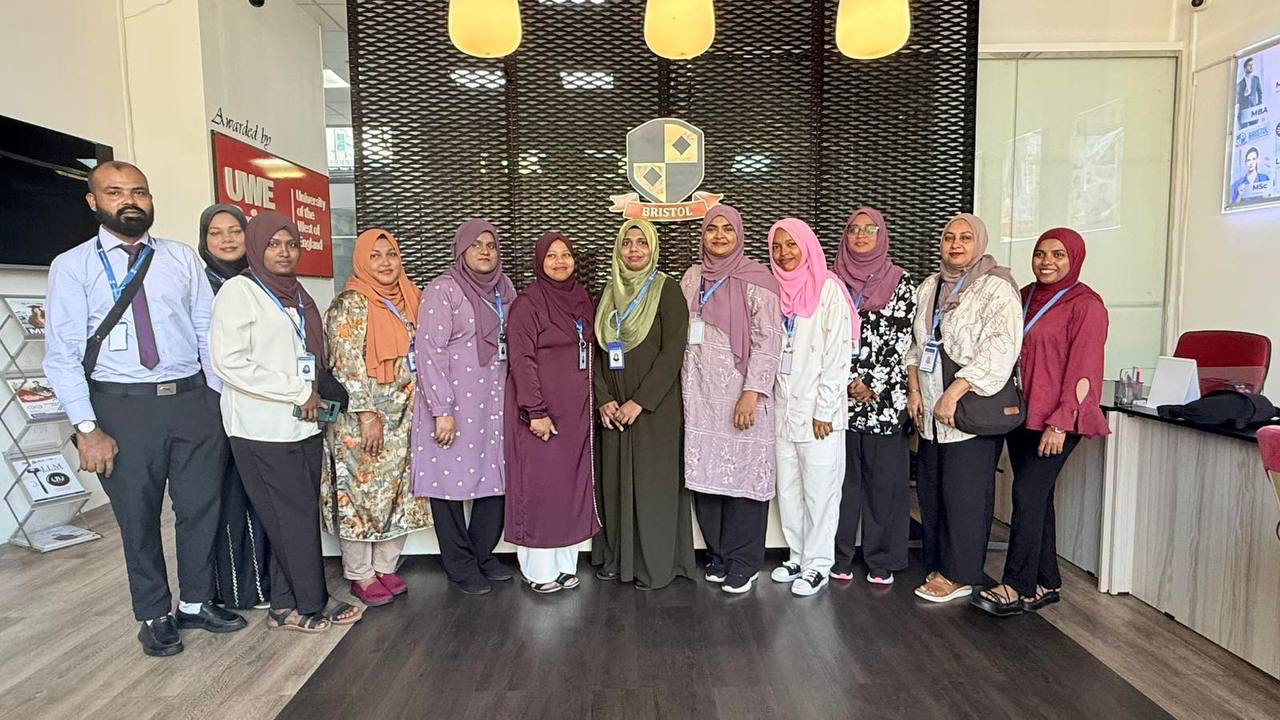
On 28 July, the team expanded their understanding of special educational needs through visits to vocational and international institutions. Dressed in traditional Maldivian national attire, the students visited SERD, a vocational training institution for individuals with special needs. There, they examined vocational training programmes and discussed ways to expand educational opportunities for young people with special needs in the Maldives. Later that day, the group visited Tree House International to observe modern classroom practices and engage with teachers on learner support strategies, gaining valuable benchmarks for local educational development.
To provide a well-rounded experience, the programme integrated visits to key economic and cultural sites, including the Labookellie Tea Factory. Learning about Sri Lanka's tea manufacturing industry helped students appreciate the social and economic contexts that shape local communities and education systems. This broader perspective aligns with Villa College's commitment to nurturing globally minded, community-focused educators who understand how external social factors influence student learning and development.
Through this international mobility initiative, Villa College continues to equip future educators with the practical skills, cross-cultural competence, and reflective mindset needed in today's changing educational landscape. By connecting academic theory with direct international experience, the Faculty of Educational Studies helps prepare competent, resilient teachers capable of driving positive change and improving inclusive education practices in the Maldives.